CNC Machine Manufacturers in Australia.
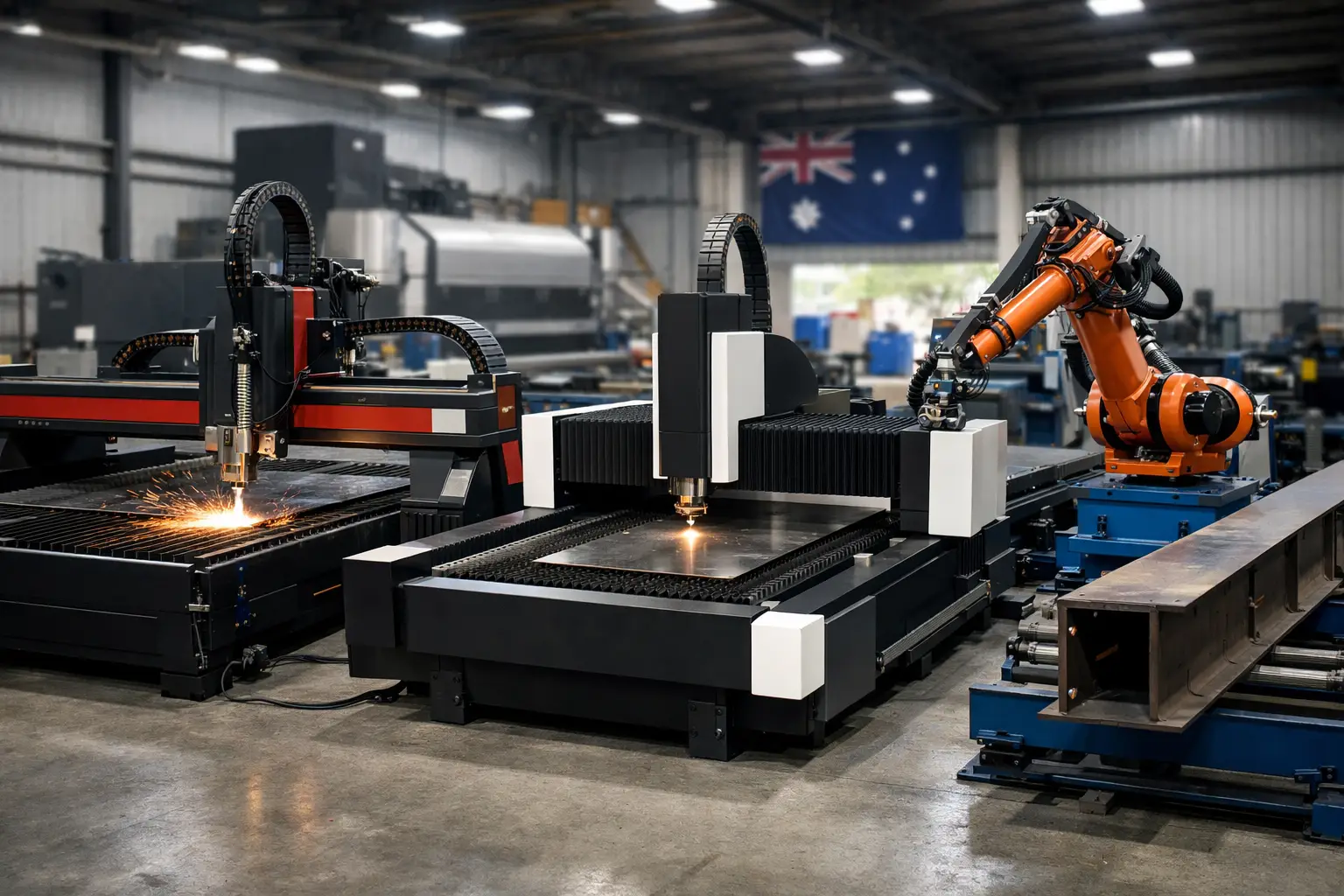
If you are comparing CNC machine manufacturers in Australia, the real question is not who has the biggest catalogue or the flashiest brochure. It is who can supply the right machine for your production, stand behind it when something goes wrong, and help you keep the workshop moving when downtime starts costing real money.
That matters because CNC buying decisions are rarely just about capital cost. A plasma cutter, router or fibre laser can improve throughput, reduce labour pressure and tighten quality control, but only if the machine suits your material, your workload and your operators. If it is overspecified, you pay for capability you will never use. If it is underspecified, you end up fighting bottlenecks, poor cut quality and service issues from day one.
What separates CNC machine manufacturers in Australia
Not every supplier in the market is actually a manufacturer. Some businesses design and build equipment locally. Some import complete systems. Others resell machines from overseas brands and add installation or limited support. None of those models is automatically wrong, but they are not equal when you need advice, parts or technical backup.
A genuine Australian manufacturer usually has a stronger handle on machine design, software integration and application fit. They are closer to the engineering decisions that affect performance. That tends to matter when your job is not standard, your material mix changes, or your production flow needs a tailored setup rather than an off-the-shelf package.
Local manufacturing also changes the support equation. When the team selling the machine is the same team involved in designing, building, programming or commissioning it, problems are usually diagnosed faster and resolved with fewer handballs. You are not stuck between a reseller, a freight delay and an overseas factory timetable.
For many Australian workshops, that is the real dividing line. It is not simply where the frame is welded or where the control system originated. It is whether the business you buy from can take responsibility for the full machine lifecycle.
The questions serious buyers should ask
Before comparing brands, be clear on your own process. A machine that suits a structural steel fabricator may be the wrong fit for a sign shop or cabinetmaker. Even within metal fabrication, plate thickness, duty cycle, nesting requirements and production targets can push you towards very different solutions.
Start with material type and volume. Mild steel, stainless, aluminium, composites, timber and plastics all place different demands on cutting technology. Then look at throughput. Are you cutting occasional one-offs, or are you running repeat jobs where speed, software automation and handling efficiency make a major difference to margin?
Support should be part of the buying criteria, not an afterthought. Ask who installs the machine, who trains the operators, who carries the parts, and who answers the phone when the machine stops on a Thursday afternoon. A sharp purchase price can lose its appeal quickly if every service issue turns into a wait.
It is also worth asking how honest the supplier is about process fit. A good manufacturer or technical partner should be prepared to tell you when plasma is more sensible than laser, when a router is the better option than forcing another process to do the job, or when a used machine may suit your business stage better than buying new.
Choosing the right process, not just the right brand
The market often treats CNC as one category, but the process matters just as much as the manufacturer. If you are cutting conductive metals at speed and want a practical balance between capability and investment, CNC plasma can be the right answer. If you need finer detail, cleaner edges and stronger performance on thin sheet, fibre laser may be a better fit. If you are working with timber, plastics, ACM or non-ferrous sheet in a cabinetmaking or signmaking environment, a CNC router makes far more sense.
That sounds straightforward, but many buying mistakes happen in the grey areas. Some businesses buy for the jobs they hope to win rather than the jobs they do every week. Others focus on cut quality without considering operating cost, consumables, extraction, software workflow or operator skill level.
A capable manufacturer should walk you through those trade-offs plainly. Faster is not always better if your bottleneck is loading and unloading. Higher precision is not always worth the extra capital if your downstream process does not require it. The right machine is the one that improves the full production chain, not just one metric on a spec sheet.
Why local support often outweighs sticker price
Australian workshops do not make money from machine ownership. They make money from output. That is why after-sales support deserves more weight than many buyers give it.
When a CNC system goes down, the cost is not limited to a repair invoice. It can mean missed delivery dates, idle staff, interrupted installation schedules and pressure on every other part of the workshop. If replacement parts are hard to source or technical support is filtered through multiple parties, downtime stretches out.
This is where local manufacturers and true technical suppliers usually stand apart. They can often provide quicker fault finding, better application support and more direct access to the people who understand the machine architecture. That can be the difference between a short interruption and a week of production headaches.
For that reason, ask practical questions. How quickly are service calls handled? Are spare parts stocked locally? Is training included? Can software support be provided remotely? Will the same business that sold the machine still be supporting it years later?
Customisation matters more than many buyers expect
A lot of workshops do not need a fully bespoke machine, but very few need a completely generic one either. Table size, bed configuration, power source, extraction setup, drilling or marking options, automation level and software workflow all affect how well the machine fits the job.
That is another reason to look closely at CNC machine manufacturers in Australia rather than only comparing imported stock models. A manufacturer with in-house engineering capability can usually adapt configuration more effectively to suit your floor space, production style and material profile. The result is often a machine that performs better in the real world, not just on paper.
Customisation does not have to mean complexity. Sometimes it is as simple as matching the right software package to your operator experience, integrating with existing workflow, or setting up the machine so loading and unloading is safer and faster. The point is that machine selection should reflect how your business actually works.
What a strong manufacturer relationship looks like
The best supplier relationships are practical and long term. They start with clear advice, realistic lead times and proper commissioning. They continue with operator training, software help, servicing, consumables access and technical support that does not disappear after handover.
That is the standard many buyers are now looking for. They do not just want a machine dropped on the floor and switched on. They want a supplier who understands that production environments change, staff change, job mix changes and machine support needs to keep up.
This is where a company such as ART CNC fits a different category from a basic reseller model. When the business designs, builds, programs, installs and supports the equipment it sells, the conversation stays grounded in production outcomes. That gives buyers a clearer path from initial enquiry to long-term operation.
How to compare suppliers without wasting time
A sensible shortlist is usually built on four things: process fit, support capability, machine quality and commercial reality. If one supplier cannot clearly explain why a machine suits your work, move on. If another has no local service structure, treat that as a serious risk. If the cheapest option comes with vague answers around parts, training or software, it may not be the cheapest for long.
It also helps to judge how the supplier communicates. Straight answers are a good sign. So is a willingness to discuss limitations, duty cycle, operating cost and maintenance honestly. Buyers in fabrication and manufacturing usually do not need a sales pitch. They need someone who understands production pressure and can recommend equipment accordingly.
There is no single best choice for every workshop. A smaller business may benefit from a simpler system with strong local backup. A high-volume operation may need a more advanced setup with automation and deeper software integration. The right manufacturer is the one that can match those needs properly and support the machine once it is earning its keep.
If you are weighing up CNC options, look past the headline price and ask who will still be useful to your business after installation day. That answer usually tells you more than the brochure ever will.