Navigate
- Home
- Products & Services
- All Machines
- CNC Routers
- XT Router
- XR ROUTER – General Purpose High-Performance with ATC
- RT CNC ROUTER – Super Heavy Duty with ATC
- RTL CNC ROUTER – Heavy Duty Extra Long for Aluminium Processing
- XRS ROUTER – with Machine Vision Alignment System for Cutting Printed Signs
- XRD ROUTER – Steered Tooling for Insulation, Ducting and Textiles
- CNC Plasma
- CNC Laser
- Metaltek XB1200 Plasma Beamline
- Machines4U Listings
- CNC Routers
- Servicing & Repairs
- Software
- TruCut Consumables & Tooling
- Financing & Leasing
- All Machines
- Store
- CNC Knowledge Centre
- Company
- Gallery
- User Portal
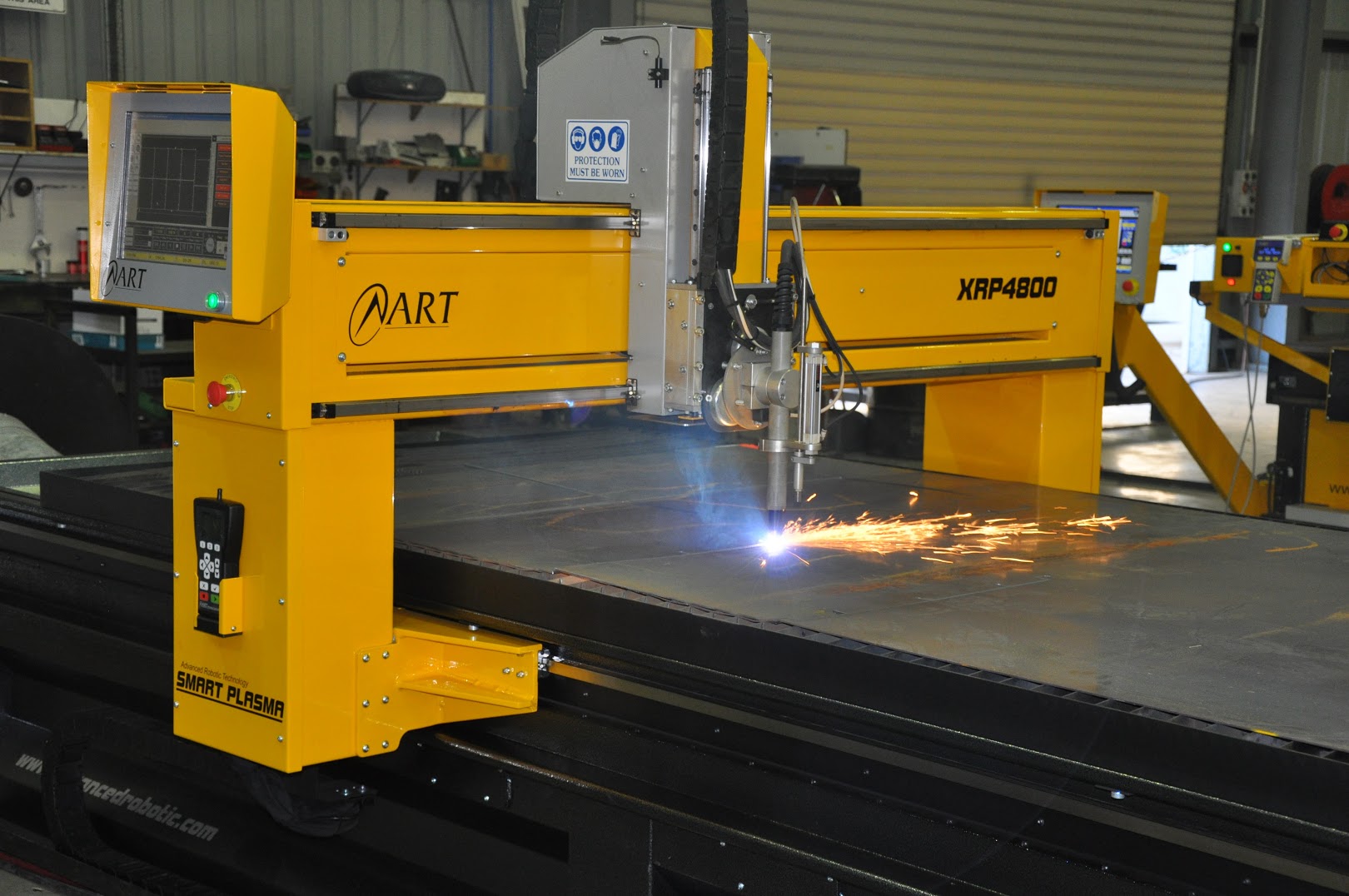
If you are comparing cutting processes for a fabrication shop, one of the first questions to get clear on is simple: how does CNC plasma cutting work? The short answer is that it uses an electrically conductive gas stream to create a high-temperature plasma arc, then a CNC-controlled machine moves that arc along a programmed path to cut metal accurately and at speed. The better answer, and the one that matters when you are buying or running equipment, is in how the torch, power source, motion system, software and operator setup all work together.
How does CNC plasma cutting work in practice?
At the torch, compressed gas is forced through a small nozzle. An electrical arc forms between an electrode inside the torch and the workpiece. That arc superheats the gas until it becomes plasma – an ionised stream that is hot enough to melt steel, stainless steel and aluminium. Because the plasma is pushed through a constricted nozzle at high velocity, it does two jobs at once: it melts the material and blows the molten metal out of the kerf.
That is the cutting part. The CNC part is what turns a plasma cutter into a repeatable production machine. A programmed control system tells the machine where to move, how fast to travel, when to pierce, when to cut, and how to handle corners, holes and lead-ins. Instead of relying on manual torch movement, the machine follows a precise path based on your drawing or nested part file.
For fabrication businesses, that combination is the real value. You are not just making a cut. You are producing the same part again and again with predictable speed, material use and labour input.
The main components of a CNC plasma system
A CNC plasma cutting system is really a group of systems working together. If one part is wrong, cut quality and uptime suffer.
Power source and torch
The power source generates the electrical energy needed to create and maintain the plasma arc. Different power sources suit different plate thicknesses, production volumes and cut quality expectations. The torch then directs that energy through consumables such as the electrode, nozzle, swirl ring and shield.
Consumables matter more than many shops expect. Worn or incorrect consumables can affect kerf width, bevel, dross and piercing reliability. They also have a direct effect on operating cost.
Gas supply
Plasma cutting uses gases to form and stabilise the arc and to help remove molten material. Depending on the system and material, that might involve air, oxygen, nitrogen or mixed gas setups. The right gas choice affects edge quality, speed and consumable life.
This is where process selection becomes important. A setup that works well on mild steel will not be ideal for stainless or aluminium, and what suits occasional cutting may not suit production work.
CNC controller and software
The controller is the machine’s brain. It reads the program, coordinates axis movement and manages cut parameters. The software side handles drawing import, nesting, toolpath generation and machine instructions.
Good software does more than move the torch from A to B. It can improve material yield, reduce operator intervention and help maintain consistency across jobs and shifts.
Motion system and table
The gantry, drives, rails and cutting table control how accurately and smoothly the torch moves. A rigid, well-built motion system is critical for part accuracy, especially when you are running production work or larger sheets.
The cutting table itself also matters. It supports the plate, manages slag and fumes, and affects day-to-day maintenance. Downdraft and water table designs each have their place depending on material, workshop setup and extraction requirements.
Height control
Torch height control is one of the most important parts of the process. The machine needs to keep the correct standoff distance between the torch and the plate. If the torch runs too high or too low, cut quality drops and consumable wear increases.
A height control system monitors arc voltage and adjusts torch position during cutting. This helps compensate for plate variation and heat distortion, which is particularly useful on longer runs or sheets that are not perfectly flat.
From drawing to finished part
A typical job starts well before the arc fires. The operator imports a drawing file into the software, applies cut settings for the material and thickness, and nests the parts on the sheet. The software creates toolpaths, including pierce points, lead-ins, lead-outs and cutting sequence.
Once the sheet is loaded, the machine references its position and moves the torch to the first pierce location. The torch then sets its initial height, the arc starts, and the machine pierces the plate. After piercing, the torch lifts or transitions to cut height and begins moving along the programmed path.
During the cut, the controller manages travel speed and motion while the height control maintains the correct torch position. On internal holes, corners and fine features, the machine may adjust speed to maintain edge quality. When one part is complete, it moves to the next path until the sheet is finished.
That whole process sounds straightforward, and it is once the system is set up properly. The real difference between an average result and a reliable production result comes from how well the machine, software and cut parameters have been matched to the work.
What actually determines cut quality?
Many people assume plasma quality comes down to amperage alone. It does not. Amperage matters, but so do torch height, consumable condition, gas quality, travel speed, piercing setup, machine rigidity and nesting strategy.
If travel speed is too slow, you can get more dross and a wider kerf. Too fast, and the arc may lag, leading to bevel and incomplete cuts. Poor pierce settings can cause excessive spatter, which damages consumables and affects the next cut. If the table or gantry lacks rigidity, you may see vibration or positional errors.
Material type and thickness also change the picture. Plasma is highly effective across a broad range of conductive metals, but the ideal settings and expected finish will vary. Thin sheet, medium plate and heavier sections each have their own sweet spot.
This is why practical support matters. Shops do not just need a machine that can cut. They need one configured for their actual workload, with guidance on process setup and support when production issues appear.
Where CNC plasma cutting fits best
CNC plasma cutting is widely used because it offers a strong balance of speed, versatility and operating cost for conductive metals. For many fabrication and manufacturing businesses, it is the most practical solution for cutting mild steel, stainless steel and aluminium plate efficiently.
It is particularly well suited to structural parts, brackets, base plates, gussets, signs, general fabrication components and production batches where throughput matters. If your operation needs quick turnaround, repeated part accuracy and less manual layout work, CNC plasma can remove a significant bottleneck.
That said, it is not a one-size-fits-all process. If you need extremely fine detail, very tight tolerances or exceptionally clean edge finish on thinner materials, another process may be more suitable. The right answer depends on material range, tolerance requirements, throughput targets and the way your workshop actually operates.
The trade-offs worth understanding
Plasma is fast and productive, but every cutting process has trade-offs. Compared with manual cutting, CNC plasma gives far better repeatability, productivity and material utilisation. Compared with some other automated cutting methods, it can be more cost-effective for a wide range of plate work.
The trade-off is that edge finish and tolerance are process-dependent. On some jobs, the result is more than suitable straight off the table. On others, you may still allow for secondary finishing, hole drilling or edge preparation depending on the spec.
There is also a difference between buying a machine and buying a working production solution. A machine that looks capable on paper can still become a problem if the software is clunky, service is slow or the setup was never matched properly to your jobs.
That is why many Australian businesses look for a supplier that can engineer the system, configure the right process, install it properly and back it up when it matters. ART CNC works in that space because local support, honest advice and fast response are not extras when a machine is tied directly to output.
What operators and managers should pay attention to
If you are running or specifying a CNC plasma system, focus on the factors that affect output every day. Start with material range, thickness, expected tolerances and volume. Then look at software usability, table size, height control performance, consumable availability and service response.
Operator training is another major factor. Even a strong machine will underperform if the team is guessing their way through pierce settings, nesting or maintenance. Good training reduces scrap, protects consumables and helps the machine deliver what it was bought to do.
Maintenance should also be treated as part of production, not an afterthought. Clean rails, sound air quality, correct petrol supply, torch inspection and routine checks on consumables all help keep performance stable and downtime lower.
If you are asking how does CNC plasma cutting work, the technical answer is only half the story. In a real workshop, it works well when the machine is properly built, the process is properly selected and the support behind it is strong enough to keep production moving. That is the part worth getting right from the start.
Contact details.
- Australia Phone
- +61 7 3393 6555
- View our email address
- Address
- 73 Boyland Ave, Coopers Plains. QLD 4108. Australia