Navigate
- Home
- Products & Services
- All Machines
- CNC Routers
- XT Router
- XR ROUTER – General Purpose High-Performance with ATC
- RT CNC ROUTER – Super Heavy Duty with ATC
- RTL CNC ROUTER – Heavy Duty Extra Long for Aluminium Processing
- XRS ROUTER – with Machine Vision Alignment System for Cutting Printed Signs
- XRD ROUTER – Steered Tooling for Insulation, Ducting and Textiles
- CNC Plasma
- CNC Laser
- Metaltek XB1200 Plasma Beamline
- Machines4U Listings
- CNC Routers
- Servicing & Repairs
- Software
- TruCut Consumables & Tooling
- Financing & Leasing
- All Machines
- Store
- CNC Knowledge Centre
- Company
- Gallery
- User Portal
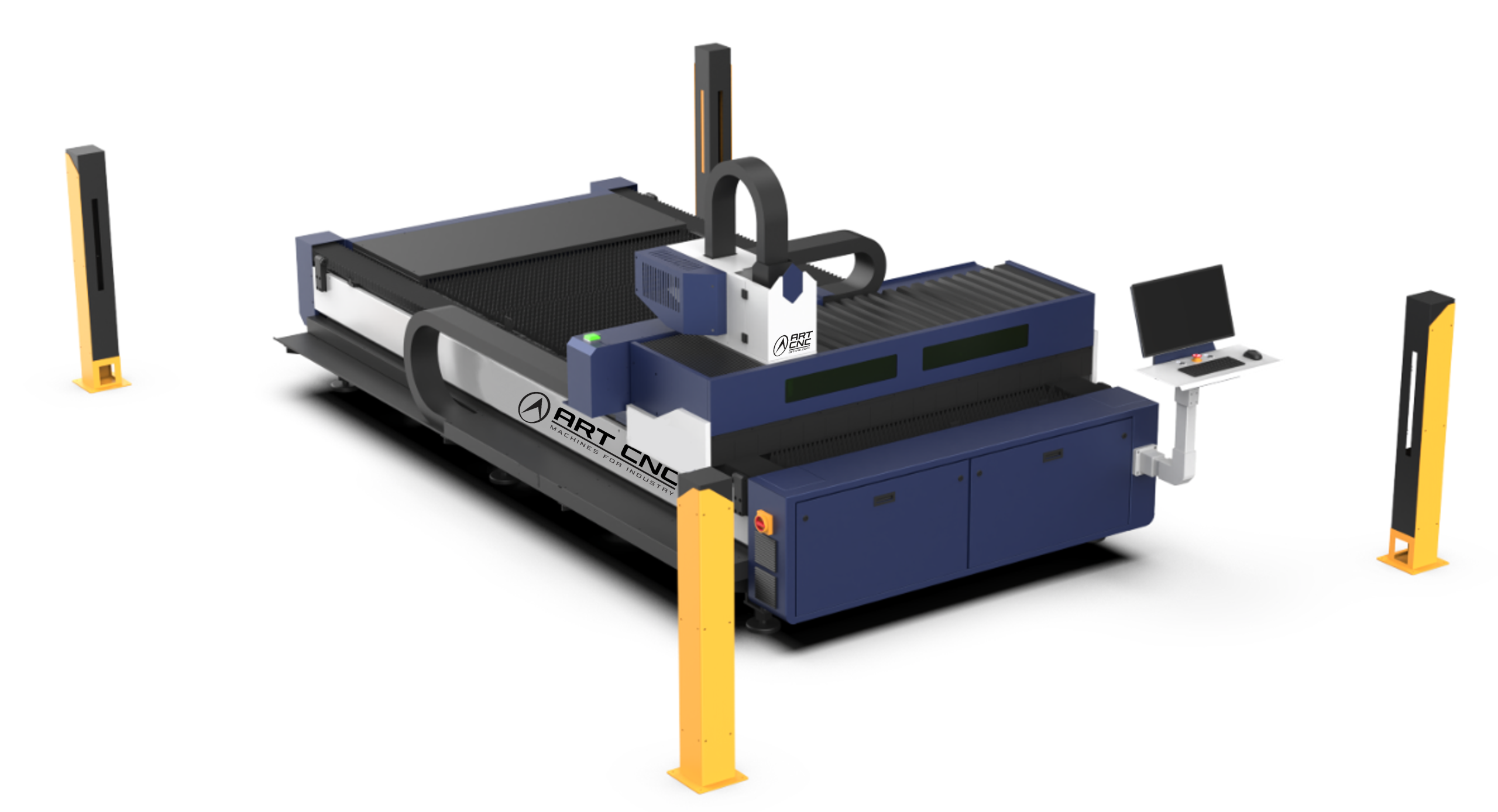
A fibre laser cutting machine that Australian manufacturers can rely on has to do more than cut cleanly on day one. It needs to suit your material mix, hold tolerance across real production runs, integrate with your workflow, and come with support that does not disappear once the machine is on the floor. That is where many buying decisions are won or lost.
For fabrication shops and production businesses, fibre laser technology can be a serious step forward. It offers faster cutting on many metals, lower maintenance than older laser platforms, and the ability to bring more work in-house. But not every operation needs the biggest table, the highest wattage, or the most heavily marketed option. The right decision usually comes down to throughput, material type, staffing, software, and local service.
What a fibre laser cutting machine in Australia needs to handle
Australian workshops tend to be practical environments. Machines are expected to work hard, cope with variable job mixes, and keep earning. That means a fibre laser has to perform well in more than a showroom demo.
For many businesses, the real test is whether the machine can cut the materials you process most often, at the thicknesses that actually matter to your margins. If you are mainly cutting thin to medium mild steel, stainless or aluminium, a fibre laser can be an excellent fit. If your work regularly moves into heavy plate, process selection becomes more nuanced, and another cutting method may still have a place in the workshop.
There is also the local factor. In Australia, support matters more than many buyers first realise. A machine that looks sharp on paper can become an expensive problem if replacement parts are slow to arrive, service is outsourced, or technical advice is vague when production stops. Downtime is not theoretical when staff are waiting and delivery dates are fixed.
Why fibre laser technology appeals to production businesses
The main attraction is straightforward – speed, edge quality and repeatability. On suitable material ranges, fibre laser cutting can produce very clean parts with minimal post-processing. That can reduce grinding, deburring and handling time, which is often where hidden labour costs sit.
It also helps when jobs change frequently. Businesses that cut a mix of brackets, panels, enclosures, structural components or production parts often value the ability to move quickly from one program to the next while maintaining consistency. Good nesting software and stable machine control make a real difference here, especially when operators are under pressure to keep work moving.
Running costs are another part of the equation. Compared with older laser technologies, fibre systems generally offer better electrical efficiency and fewer maintenance demands. That does not mean they are maintenance-free. Optics, assist gas delivery, consumables, extraction and operator practices still affect performance. But the day-to-day burden is often lower than buyers expect, particularly when the machine is properly configured and supported.
Choosing a fibre laser cutting machine that Australian businesses actually need
The first mistake buyers make is starting with wattage alone. Power matters, but only in context. A higher-powered machine may increase productivity on certain materials and thicknesses, but if your work is mostly lighter gauge sheet, the premium may not return value as quickly as expected.
The better place to start is your production reality. Look at the materials you cut every week, not the occasional job that comes through once a month. Consider sheet sizes, expected output, part complexity, edge quality requirements, and whether your bottleneck is cutting speed or downstream handling. In some shops, a faster machine does not solve the problem if loading, unloading or programming are still slowing everything down.
Table size is another decision that deserves proper thought. Larger bed sizes can improve flexibility and reduce handling for bigger sheets, but they also require floor space, extraction planning and workflow changes around the machine. If the machine interrupts the rest of the workshop, the gain on paper may not translate into smoother production.
Automation can also be worth discussing, but only when it matches your labour model and job volume. For higher-throughput operations, automated loading and unloading may improve consistency and reduce non-cutting time. For others, a well-specified manually operated system with strong software and reliable support may be the smarter investment.
Software, programming and operator usability
A laser is not just a cutting head on a gantry. The software matters just as much as the mechanical platform. If programming is clumsy, nesting is inefficient, or the interface slows operators down, production suffers no matter how good the machine looks in a brochure.
Shops should assess how easily the system handles job import, nesting, cut sequencing and material libraries. It is also worth asking how simple it is to train new staff, manage repeat jobs and troubleshoot alarms. A machine that depends on one highly experienced operator can create risk if that person is away or leaves.
This is where dealing with a company that understands both the machinery and the programming side becomes important. In practice, good support often means helping customers improve process settings, refine workflows and get more out of the machine over time, not just fixing faults when something breaks.
Support is not an extra – it is part of the machine
When buyers compare fibre laser systems, they often focus heavily on purchase price and specification sheets. That is understandable, but it can be short-sighted. The real cost of ownership includes response times, training quality, spare parts access, installation standards and whether the supplier can actually support the machine they sold.
For Australian businesses, local backup matters. If your machine stops mid-week and the answer is an email trail across time zones, you are carrying the risk. If support is direct, knowledgeable and available locally, problems are usually resolved faster and with less disruption.
That is one reason many buyers prefer to deal with a manufacturer or engineering-led supplier rather than a business that simply imports and resells equipment. There is a big difference between reading from a manual and understanding how the machine was designed, configured and programmed.
ART CNC works in that space – designing, building, programming and supporting CNC cutting systems here in Australia. For customers, that usually means clearer advice at the front end and more dependable technical backup after installation.
Common trade-offs to consider before buying
No fibre laser suits every workshop equally well. If your workload includes a broad mix of materials and thicknesses, you may need to think carefully about how the laser fits alongside your existing processes rather than assuming it replaces everything.
Power, speed and edge quality usually involve trade-offs with budget and operating requirements. More output can mean higher upfront cost and greater demand on extraction, gas supply and operator discipline. A larger machine may offer flexibility but increase footprint and handling complexity. More automation can reduce labour at the table but adds capital cost and may not stack up for lower-volume work.
There is also the question of growth. Some businesses buy for current demand only, then outgrow the machine earlier than expected. Others overspecify in the hope of future capacity and spend money on capability they do not use. Honest advice should sit somewhere in the middle – enough machine to support your workload and business plan, without pushing you into the wrong investment.
Questions worth asking before you commit
Ask what materials and thickness ranges the machine is genuinely suited to in production, not just under ideal test conditions. Ask how long installation and commissioning will take, what operator training is included, and who provides service when things go wrong.
It is also worth asking about replacement parts, software updates, phone support, and how the supplier helps customers optimise cut quality over time. If the answers are vague, that tells you something. If the conversation turns quickly to price without understanding your workload, that tells you even more.
A good supplier should be willing to discuss whether a fibre laser is the right process at all. Straight advice builds trust. It also helps prevent the kind of mismatch that leads to frustration six months after purchase.
Making the right decision for your workshop
A fibre laser cutting machine that Australian businesses choose should fit the work, the people and the production goals behind it. The best machine is not the one with the biggest headline specification. It is the one that improves output, keeps quality consistent, and has the backing to stay productive over the long term.
If you are weighing up options, take the time to assess the full picture – materials, software, floor space, staffing, service response and future workload. The machine will only ever be as valuable as the support behind it and the practical fit within your operation. Buy with that in mind, and you are far more likely to end up with equipment that keeps earning its place on the workshop floor.
Contact details.
- Australia Phone
- +61 7 3393 6555
- View our email address
- Address
- 73 Boyland Ave, Coopers Plains. QLD 4108. Australia