What Is a Plasma Beamline?.
If your workshop is still moving long steel sections from saw to drill to marking station to manual coping, you already know where the time goes. When people ask what is a plasma beamline, they are usually really asking a more practical question – how do we process beams, channels and sections faster, with less handling and fewer bottlenecks?
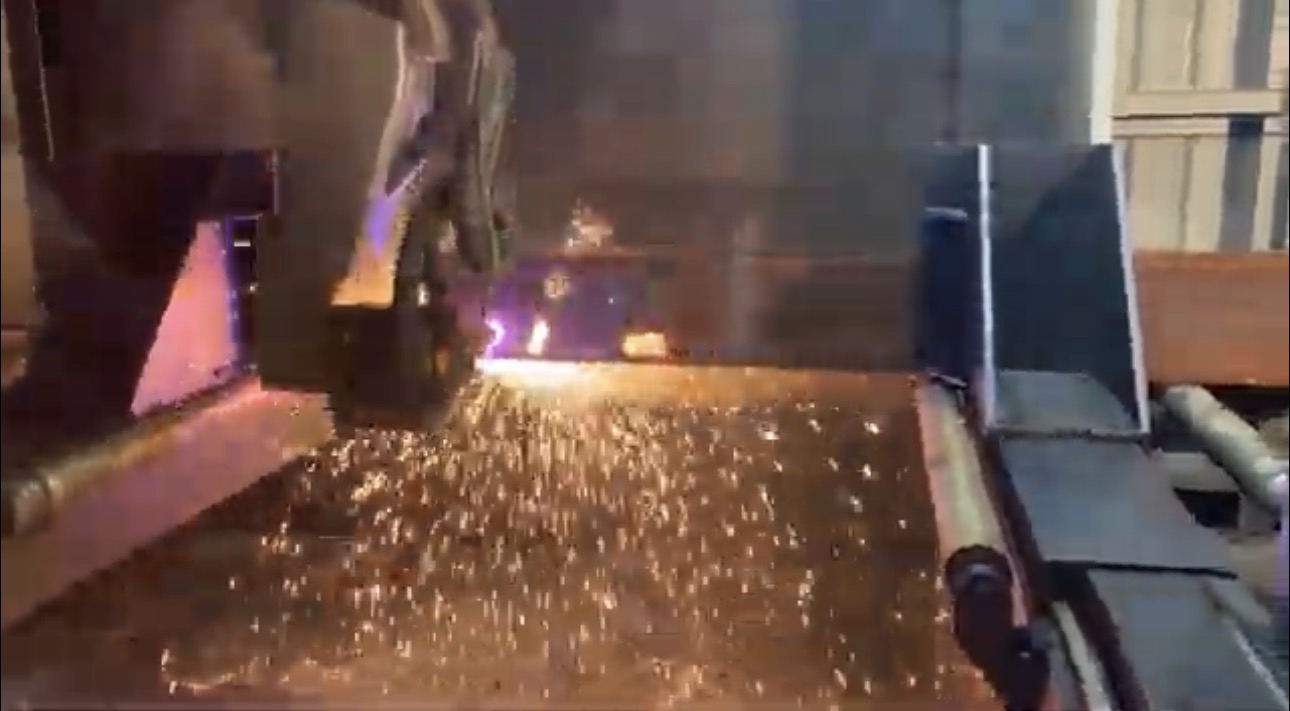
A plasma beamline is a CNC machine built to process structural steel sections in one automated flow. Rather than cutting only flat sheet, it is designed for beams, channels, angles, RHS, SHS and similar profiles. Depending on the configuration, a plasma beamline can measure the section, position it automatically, cut to length, cope ends, slot, drill, mark and scribe, all under CNC control.
For fabrication businesses handling structural work, that matters because the job is rarely just one cut. The real cost often sits in repeated handling, setup time, operator dependency and the risk of small errors compounding across a project. A beamline is aimed at removing those pain points.
What is a plasma beamline used for?
In practical terms, a plasma beamline is used to process long metal sections accurately and consistently for downstream fabrication or assembly. That can include structural frames, sheds, transport components, trailers, mining infrastructure, construction steel and general engineered fabrication.
The machine feeds the section through a controlled axis system while the cutting head and tooling perform programmed operations at the required positions. Instead of manually measuring and marking every feature, the operator loads the material, calls up the job and supervises the process.
This is why beamlines appeal to workshops that need repeatability. If you are producing one-off structural members every now and then, manual methods may still be workable. If you are producing sections all day, every day, the labour and time savings become much harder to ignore.
How a plasma beamline works
At its core, a plasma beamline combines material handling, CNC positioning and profile processing in a single machine platform. The section is loaded onto the infeed area and advanced through driven rollers or conveyors. The control system identifies where the material is, then moves it to each programmed position for cutting, drilling or marking.
The plasma torch does the cutting work on profiles and contours. Plasma is well suited to structural steel because it can cut quickly and handle a wide range of thicknesses. On many machines, additional tools can be integrated for drilling, centre marking, layout marking or scribing. That means the beam exits the machine closer to assembly-ready, rather than needing more manual work before fabrication can continue.
Software is a big part of the equation. A beamline is only as effective as the programming behind it. The right software allows jobs to be imported, nested into production schedules and converted into machine-ready instructions with minimal rework on the shop floor. Good software also reduces operator guesswork, which is often where delays and avoidable mistakes creep in.
What is a plasma beamline compared with a standard plasma table?
This is where some confusion comes in. A standard CNC plasma table is designed for flat plate. It excels at profiling sheet and plate components, but it is not intended to process long structural sections efficiently.
A plasma beamline is different because the machine architecture is built around profiles rather than flat material. It supports the section, advances it accurately and gives access to multiple faces of the workpiece. That is what allows it to perform operations on beams and hollow sections that would be awkward, slow or inconsistent using plate-focused equipment.
So if your work is mostly brackets, gussets and plate parts, a plasma table may be the right fit. If your workflow revolves around UB, UC, PFC, angle, RHS or SHS and you are trying to reduce manual handling, a beamline is usually the more appropriate solution.
The main advantages of a plasma beamline
The biggest gain is productivity, but that needs to be unpacked properly. Faster cutting is only one part of it. The more valuable improvement is often the reduction in touch points across the job.
When one machine can feed, position, cut and mark a beam in sequence, you cut down on forklift movements, manual measurements and waiting time between stations. That improves throughput and also helps with workshop flow. Staff spend less time shifting material around and more time on work that actually adds value.
Accuracy is another major advantage. CNC-controlled positioning improves consistency across batches, which helps when parts need to fit first time during fabrication or site assembly. Marking and scribing functions can also make downstream welding and assembly quicker because the layout information is already on the section.
There is also a labour benefit. Skilled labour is expensive and hard to replace. A beamline does not remove the need for good operators, but it reduces the amount of repetitive manual processing that relies on individual experience. That can make production more predictable and less vulnerable when key staff are unavailable.
Where a plasma beamline may or may not suit your business
A plasma beamline is not automatically the right answer for every workshop. If your section processing volume is low, or your work changes constantly in ways that do not justify automation, the investment may be harder to support.
It also depends on the type of work you do. Some businesses need heavy drilling capacity, some need advanced coping, and some are focused on throughput of standard structural members. The right machine specification depends on the mix of materials, section sizes, part complexity and the role the machine needs to play in your broader production line.
That is why honest machine selection matters. A beamline should fit your workflow, not the other way around. If a simpler setup will do the job, that is worth saying. If your current bottleneck is section processing and your team is spending too much time on manual handling and secondary operations, then a beamline becomes a far more compelling option.
What to look for when choosing a plasma beamline
The starting point is material range. You need a machine that can reliably handle the sections you process most often, not just the occasional outlier. Beam size capacity, section type compatibility and feed length all need to line up with your real workload.
After that, look closely at process capability. Some beamlines are primarily set up for plasma cutting, while others incorporate drilling and marking features that make a significant difference to overall efficiency. The right choice depends on whether you want the machine to perform one task quickly or replace several manual steps in a single pass.
Support should be part of the buying decision, not an afterthought. Beamlines are production machines. If they stop, work backs up quickly. Local technical support, spare parts access, commissioning and operator training all matter more than they do on a brochure. For Australian workshops, local knowledge and fast response times can be the difference between a manageable issue and a costly week of downtime.
Software usability also deserves proper attention. A machine with strong mechanical design can still become frustrating if programming is clunky or difficult for operators to learn. In most workshops, the best result comes from software that is powerful enough for complex jobs but practical enough for everyday production.
Why beamlines matter in modern steel fabrication
Margins in fabrication are under pressure from every angle – labour, lead times, rework, freight and customer expectations. Businesses cannot afford too many manual bottlenecks in the middle of production, especially on repetitive structural work.
That is where a plasma beamline earns its place. It gives workshops a more controlled, repeatable way to process sections at speed, while reducing handling and helping jobs move through fabrication with fewer delays. It is not just about replacing a manual process. It is about tightening the whole operation so estimating, scheduling and delivery become more reliable.
For businesses planning growth, beamlines can also create capacity without simply throwing more labour at the problem. That matters in a market where experienced people are hard to find and harder to keep.
If you are assessing equipment and trying to work out what will actually improve output, start with the bottleneck, not the brochure. If long section processing is slowing the shop down, a plasma beamline is often the machine that changes the pace of the whole workshop. The right one should not just cut steel well – it should make the rest of your operation easier to run.