How to Choose a CNC Cutting System.
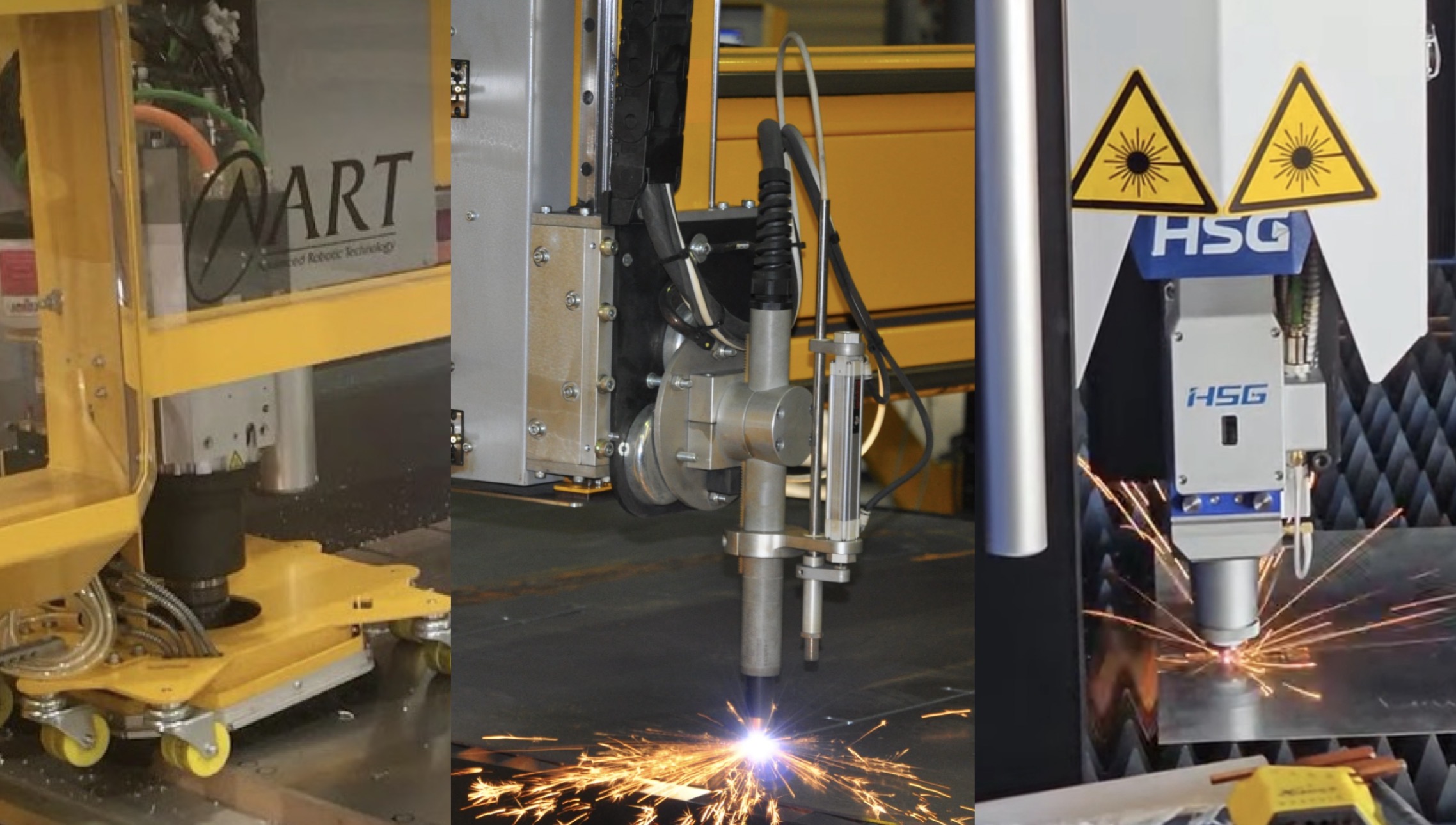
A CNC cutting system can either remove a production bottleneck or create a new one. That is why knowing how to choose a CNC cutting system starts with the work you need it to do every day, not with a brochure, a price tag, or a single machine spec that looks good on paper.
Plenty of businesses start the buying process by asking which machine is best. The better question is which cutting process is best for your materials, throughput, tolerances, labour profile, and future workload. If that part is rushed, it is very easy to end up with a machine that is technically capable but commercially wrong.
How to choose a CNC cutting system without guessing
The first step is to get clear on your actual production mix. Material type, material thickness, sheet size, part complexity, edge quality requirements, and batch volume all matter. A sign manufacturer cutting composite panels has a very different requirement to a steel fabricator processing plate for structural work, even if both are asking for a CNC table.
This is where buyers can get caught out. They compare machine dimensions, cutting speeds, or advertised accuracy before confirming whether plasma, fibre laser, router, or a more specialised beamline setup suits the job. The right answer depends on what you cut most often, what margins you need to protect, and where delays are hurting the business now.
If your work is mainly conductive metals and you need fast, productive cutting across a broad thickness range, plasma often makes sense. If your priority is fine detail, cleaner edges, and high-speed production in thinner metals, fibre laser may be the stronger fit. If you are cutting timber, plastics, aluminium composite, or non-ferrous sheet materials for cabinetry or signage, a router is usually the logical direction. Beamline systems belong in a different conversation again, particularly where structural steel processing and automation are central to output.
No process is universally better. There are trade-offs in capital cost, running cost, cut finish, operator skill, floor space, extraction requirements, and material suitability. Good buying decisions come from matching the process to the workload, not from trying to make one machine solve every problem.
Start with the material, not the machine
Material is usually the clearest filter. If the bulk of your work is mild steel plate, stainless, or aluminium, the next question is thickness range and finish expectation. A shop cutting heavy plate for fabrication may place more value on throughput and cost per part than on a laser-quality edge. Another business producing precision components may see cut quality and reduced secondary processing as the real savings.
Thickness variation matters more than many buyers expect. A system that performs brilliantly on thin sheet may not be the right choice once thicker plate becomes a regular part of the schedule. The reverse is also true. Buying around occasional heavy work can leave you overcapitalised for the work that actually pays the bills every week.
You also need to think about material handling. Full sheets, long stock, nested components, offcuts, and load-unload time all affect output. A cutting head is only one part of the system. If operators spend too much time moving material or waiting between jobs, the machine’s rated speed will not translate into real production gains.
Cut quality and tolerance should be judged honestly
Many workshops over-specify tolerance because it sounds safer. In practice, the right level of precision depends on what happens after cutting. If parts are welded, folded, drilled, or machined later, your required tolerance may be different to a component that needs to come off the table ready for dispatch.
The same applies to edge finish. A cleaner edge can reduce downstream labour, but only if your workflow actually benefits from it. Paying for a process that exceeds your quality requirement may not improve profitability. On the other hand, underestimating finish requirements can lead to grinding, rework, and slow jobs that quietly erode margins.
Think beyond purchase price
Capital cost always matters, but it should never be the only measure. A lower entry price can look attractive until consumables, downtime, poor nesting efficiency, or support delays start costing you production hours. A more capable system may carry a higher upfront investment while delivering stronger output, less rework, and better long-term value.
When weighing cost, look at the full operating picture. That includes power consumption, petrol requirements where relevant, consumable life, software capability, maintenance access, extraction, floor space, and training. It also includes how quickly your team can become productive on the machine.
For many Australian workshops, downtime risk is a bigger financial issue than purchase price. If a machine stops and support is slow, the cost is not just a repair invoice. It is missed deadlines, overtime, frustrated staff, and customers looking elsewhere. That is why local technical support, parts availability, and practical commissioning matter just as much as the machine specification.
Software can make or break the result
A CNC cutting system is not just steel, drives, and a gantry. The control software, nesting software, and operator interface have a direct impact on throughput and waste. Strong software can simplify job setup, reduce operator error, improve sheet yield, and make repeat work more consistent.
This is especially important if you are trying to reduce dependency on one experienced operator. A system that is difficult to program or awkward to use can turn a good machine into a constant interruption. Better software will not replace training, but it will shorten the path from installation to reliable production.
How to choose a CNC cutting system for your workflow
Workflow is often where the real answer sits. Ask how the machine will fit into the broader operation. Will it feed welding, folding, assembly, or dispatch? Will it run one shift or multiple shifts? Do you need manual loading, or are you moving towards automation because labour is tight and uptime matters more?
A machine that suits a small batch environment may not suit a business pushing repeat production every day. Likewise, a heavily automated setup can be hard to justify if your work is highly variable and the bottleneck sits somewhere else in the factory. The best system is the one that improves the whole process, not just the cutting stage.
Future growth should be part of the conversation, but it needs to be realistic. Buying with no headroom can box you in quickly. Buying too far ahead can tie up capital in capacity you may not use for years. The right balance usually comes from looking at your current work, confirmed pipeline, and the type of jobs you want to win next.
Service, training, and after-sales support are part of the machine
This is the area many buyers leave too late. Installation quality, operator training, service response, and access to parts all shape the machine’s performance after it arrives. A CNC cutting system is not a once-off purchase that ends at delivery. It is an operational asset that needs support over its life.
Ask practical questions. Who installs the machine? Who trains the operators? Who answers the phone when there is a fault? Are spare parts held locally? Can the supplier help with process setup, consumables, and software issues, or do they disappear once the invoice is paid?
A serious supplier should be able to talk openly about fit-for-purpose machine selection, not just what they want to sell. That means discussing material range, production targets, workshop constraints, and trade-offs with no nonsense. Businesses that need dependable output are far better served by a partner who gives straight advice than by one who simply pushes the highest-ticket option.
For Australian manufacturers, local support has real weight. Time zones, freight delays, and generic remote advice can be a problem when production is on hold. A company such as ART CNC that designs, builds, programs, installs, and supports the equipment can usually provide a more practical path from enquiry through to long-term operation.
What good buying decisions usually have in common
The best buyers do not chase the broadest spec sheet. They define the job clearly, understand where their costs really sit, and choose a process that matches the work. They also look hard at support, software, and commissioning, because that is where a machine proves its value after the sale.
If you are working out how to choose a CNC cutting system, keep the focus on production outcomes. What needs to be cut, how fast, to what standard, with what level of labour input, and with what support behind it? Once those answers are clear, the right machine becomes much easier to identify.
A good CNC system should not just cut material. It should give your business more control over lead times, output, quality, and confidence in the next job that comes through the door.