Choosing a CNC Router for Cabinet Making.
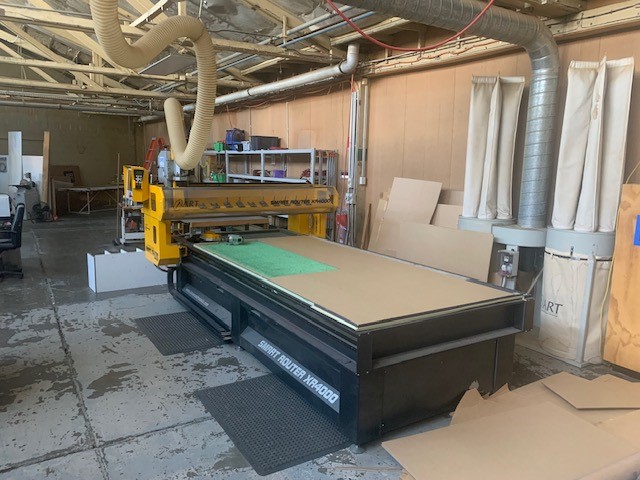
A cabinet shop usually feels the pressure before it sees the paperwork. Jobs are stacking up, labour is tight, rework is chewing hours, and the nesting saw or manual process that once kept pace is now the bottleneck. That is usually the point where a cnc router for cabinet making stops being a nice idea and starts becoming a serious production decision.
The right machine can lift output, improve consistency and reduce handling across the whole workshop. The wrong one can create a new set of problems – poor board hold-down, software headaches, unreliable parts supply or downtime that leaves the factory floor waiting. For cabinetmakers, this is not just a machine purchase. It is a workflow decision.
What a cnc router for cabinet making needs to do
Cabinet manufacturing is repetitive in the best and worst sense. The work is ideal for automation because panel sizes, drilling patterns, cut-outs and joinery can be repeated accurately all day. At the same time, any weakness in the machine or programming process shows up fast when you are cutting full sheets back to back.
A cnc router for cabinet making needs to handle nested sheet processing efficiently. That means clean cutting in melamine, MDF, plywood and particleboard, reliable drilling, accurate pocketing and dependable label-to-part flow if your operation is integrated with design software. It also needs to keep parts stable during cutting so small components do not shift, chip or get damaged before they even reach assembly.
Speed matters, but not in isolation. A fast spindle is no use if your operator loses time managing vacuum leaks, correcting poor toolpaths or sorting unfinished edges. Good cabinet production comes from a machine that works as part of a system – machine frame, spindle, drive package, vacuum table, tooling, software and operator workflow all pulling in the same direction.
Why machine selection is rarely just about table size
Buyers often start with bed dimensions and spindle power, which makes sense, but that is only part of the picture. For cabinet work, the first question should be how the machine fits your production model.
If you are processing a steady volume of standard cabinetry, a nested-based router with efficient loading and unloading may be the best fit. If your work is more varied – custom joinery, detailed components, mixed material jobs – flexibility in tooling, drilling configuration and software integration becomes more important. A machine built for one style of work can feel slow and awkward in another.
Vacuum performance is another point that gets underestimated. Cabinetmakers cut a lot of sheet product into smaller parts. Once sheets are broken down, hold-down becomes harder. If the vacuum system is undersized or the zoning is poorly matched to your job mix, parts can move, which affects accuracy and edge quality. Shops often blame tooling first, but hold-down is just as often the issue.
Then there is construction quality. In cabinet production, the machine does not get judged by how it runs on day one. It gets judged after months of dust, long shifts and repeated use. A rigid frame, quality drive components and a control system that operators can work with confidently will do more for long-term value than headline specifications on a brochure.
Software is where productivity is won or lost
Many businesses focus heavily on the hardware and leave software discussions until late in the process. That is backwards. In cabinetmaking, software affects quoting, programming, nesting, labelling, drilling logic and operator error rates. If the software chain is clunky, the machine can spend far too much time waiting for the next job.
The best setup depends on how your shop currently works. Some businesses need direct integration from design to machine code. Others need straightforward nesting software that an operator can manage quickly without a full engineering department. Neither approach is wrong. What matters is whether the software matches the skill level of your team and the variety of jobs you run.
This is also where honest advice matters. Extra software features sound good in a sales conversation, but if they add complexity without solving a production problem, they become expensive clutter. A well-configured system should reduce admin, reduce programming time and make repeat work easy to reproduce accurately.
Tooling, drilling and edge quality in cabinet production
A cabinet router is only as good as the cut quality it can produce consistently. That comes back to spindle selection, tool changing, drilling capability and the way the machine is programmed for the material.
For standard cabinetry, the ability to route, groove, drill and cut-to-size in one cycle is where major efficiency gains are found. If the machine requires too many manual interventions or awkward setup changes, productivity drops quickly. Automatic tool changing is often essential once job variety and throughput start to rise.
Drilling configuration also matters more than many buyers expect. A machine that can process common cabinet drilling patterns efficiently will save significant time over the course of a week. If your jobs involve repeated shelf pin drilling, hinge boring or hardware preparation, the drilling package should be assessed just as carefully as the spindle.
Edge quality depends on more than spindle speed. Tool geometry, feed rates, vacuum hold-down and machine rigidity all play a role. If board surfaces are prone to chipping or breakout, the answer is not always to slow the machine down. Sometimes it is a tooling issue, sometimes it is programming, and sometimes the machine simply is not configured correctly for the production task.
The real cost question is downtime, not just purchase price
Any business comparing machines will look at purchase cost first. Fair enough. But for a production workshop, the more useful figure is what happens when the machine needs service, a part fails or an operator needs help fast.
A cabinet shop with installation deadlines does not have much use for delayed responses, vague technical support or parts that take too long to arrive. Local backup matters because every idle hour has a cost. It affects labour, dispatch dates, installation schedules and customer confidence.
That is why support should be part of the buying decision from the start. Who installs the machine? Who trains the operators? Who answers the phone when the software throws a problem or the machine stops mid-job? And are they the same people who understand how the system was built in the first place?
For Australian manufacturers, local design, build knowledge and after-sales support can make a major difference over the life of the machine. ART CNC works in that space because businesses need more than a sales transaction – they need direct technical backup and service that keeps production moving.
When a cnc router for cabinet making is the right investment
Not every workshop needs the same level of automation at the same time. Some are ready because labour costs are rising and manual methods are holding back output. Others need better accuracy because rework is cutting into margins. Some want to bring more production in-house and reduce reliance on outsourced processing.
The strongest case for investment usually appears when three things are happening at once. Volume is growing, repeatability matters, and existing processes are too dependent on individual labour. That is when a CNC system starts paying its way through consistency and throughput rather than simply replacing one cutting method with another.
Still, bigger is not always better. An oversized machine with unnecessary features can add cost without improving production. A well-matched machine, properly configured for your materials, software flow and throughput, will usually outperform a more complex option that does not suit the way your shop actually works.
What to ask before you buy
The best buying conversations are practical. Ask how the machine will process your typical cabinet jobs, not just how fast it can move. Ask what vacuum setup suits your board sizes and part mix. Ask how programming is handled from design through to cut files. Ask what operator training looks like and how support works after installation.
You should also ask what trade-offs come with each configuration. A higher-output setup may demand more from dust extraction, power supply or operator skill. A simpler system may be easier to run, but slower on more complex work. Good advice should make those trade-offs clear, not hide them behind sales language.
A cabinet router should fit the business you are running now and the one you expect to be running in a few years. If the recommendation is right, the machine becomes part of your production backbone rather than another problem to manage.
The best place to start is with your actual workflow, because the right machine is the one that makes your next job easier to deliver and your workshop easier to run.