Fibre Laser Buying Checklist for Workshops.
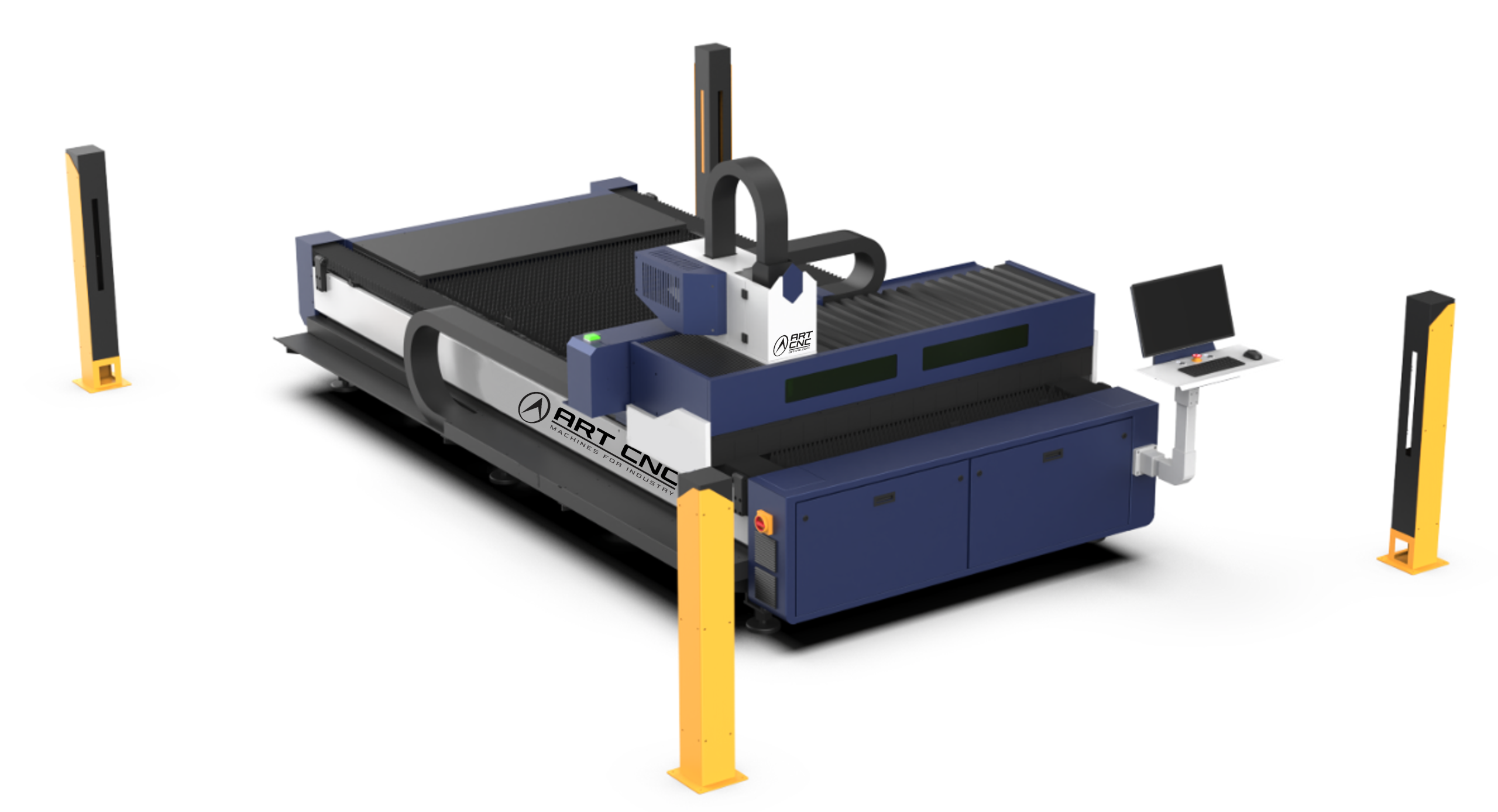
If you’re looking at a fibre laser for production, the wrong question is often the first one asked. Too many buyers start with wattage and price, when the better starting point is this fibre laser buying checklist: what do you cut, how often do you cut it, what level of throughput do you need, and what support will keep the machine earning for years rather than months.
That shift matters because a fibre laser is not just a machine purchase. It is a production decision. Get it right and you reduce bottlenecks, improve edge quality, shorten lead times and lower secondary handling. Get it wrong and you end up paying for unused capacity, struggling with material limitations, or chasing service when the machine should be working.
Start your fibre laser buying checklist with the work itself
Before comparing brands, specifications or finance options, look closely at your actual workload. Material type, thickness range, sheet sizes, nesting style, shift patterns and output targets should drive the decision.
A workshop cutting mostly thin mild steel, stainless and aluminium for general fabrication will not need the same machine configuration as a business processing thicker plate all day. Likewise, a sign manufacturer cutting fine detail in thin sheet has different priorities from a structural supplier chasing throughput and material handling efficiency.
This is where buyers can go off track. A machine that looks impressive on paper may be oversized for the work, while a lower-cost option may fall short once production ramps up. Real buying decisions should be based on your common job mix, not your biggest once-a-month sheet.
Power is important, but only in context
Power gets a lot of attention because it is easy to compare. More kilowatts often means faster cutting, broader material capability and better performance in thicker material. But higher power also affects capital cost, operating costs and sometimes the overall machine configuration required to make that power worthwhile.
If most of your work is in thinner material, buying excessive power may not give you the return you expect. On the other hand, if your production regularly includes thicker mild steel or stainless, underestimating power can create a bottleneck from day one.
The right question is not simply, “What is the biggest power available?” It is, “What power level suits our material range, cut quality expectations and daily production targets?” An honest supplier should be prepared to answer that without pushing you into more machine than you need.
Match cutting bed size to your workflow
Bed size sounds straightforward, but it affects more than sheet capacity. It shapes how material enters the process, how operators load and unload, and how efficiently jobs move through the workshop.
If you regularly process full sheets, the machine should suit the formats you actually buy and store. If your work includes oversize material, multiple part nests or production batching, table size becomes even more important. A machine that is too small creates handling inefficiencies. A machine that is too large can consume floor space and budget without improving throughput.
Look at the full cell layout, not just the cutting table. Access around the machine, forklift movement, extraction placement and sheet loading all matter in a real production environment.
Don’t ignore loading, unloading and automation
Many fibre laser buyers focus heavily on cut speed and forget that material handling often decides actual output. A fast machine still loses money if operators spend too much time waiting, repositioning sheets or sorting parts manually.
For some businesses, a shuttle table is enough. For others, automatic loading and unloading, tower storage integration or more advanced material handling can make a major difference to labour efficiency and spindle-up time. The right level depends on volume, staffing, shift structure and how much non-cutting time is built into your current process.
Automation is not always about replacing people. In many Australian workshops, it is about making the best use of skilled labour that is already hard to find. If your operators are spending too much time on sheet movement rather than production tasks, automation deserves serious consideration.
Software should support production, not complicate it
A fibre laser is only as productive as the software behind it. Nesting, job management, material libraries, cut parameter control and integration with your quoting or production workflow all affect day-to-day performance.
This is one of the most overlooked parts of any fibre laser buying checklist. Buyers often inspect the machine build closely but spend too little time understanding how operators will program jobs, recover from errors or optimise sheet usage.
Good software reduces training time, improves repeatability and makes it easier to standardise output between operators. Poor software creates dependency on one experienced person, increases mistakes and slows job changeovers.
Ask to see the software used in a real production scenario. Not a polished demo with one easy part, but the sort of nested work your business runs every week. That tells you far more than a feature list.
Service support is part of the machine
For industrial buyers, support should never be treated as an extra. It is part of the machine package. A fibre laser can be technically capable, but if spare parts, phone support, technician access and training are weak, the real cost shows up later as downtime.
Australian businesses should be especially careful here. A machine sold with limited local backing can become a problem when faults appear, consumables are delayed, or software and control issues need attention quickly. The purchase price may look attractive until production stops.
The better approach is to ask direct questions. Who provides installation and commissioning? Who trains operators? Who handles breakdown support? Are parts stocked locally? Can you speak to the people who actually know the machine, not just the sales team?
A supplier that designs, configures, services and supports industrial CNC equipment locally will usually offer more practical value than one that disappears after delivery.
Training deserves more attention than most buyers give it
Even a well-built machine underperforms if operators are not trained properly. Training should cover machine operation, parameter selection, maintenance routines, consumable handling, fault response and safe workflow around the machine.
That matters for uptime, but also for cut quality and running cost. Poor setup choices can waste assist petrol, reduce lens life, increase dross and create rework. Good training shortens the learning curve and helps the machine reach production value sooner.
Running costs need a hard look
A proper fibre laser buying checklist should always include operating costs, not just purchase price. Assist petrol consumption, power usage, maintenance requirements, consumables, lens protection, extraction and servicing intervals all affect long-term value.
Two machines with similar sale prices may perform very differently over five years. One may be easier to maintain, more efficient on petrol use, better supported for parts and quicker to service. That has a direct effect on cost per part and production reliability.
This is where honest technical advice matters. Buyers should ask for realistic operating assumptions based on their material range and shift pattern, not best-case figures taken from ideal test conditions.
Check build quality where it counts
Not every specification appears in a brochure. Frame design, motion system quality, controller stability, head technology, extraction effectiveness and electrical cabinet layout all influence machine life and day-to-day reliability.
A fibre laser built for industrial work should feel like industrial equipment. That means consistent engineering, sound safety systems, quality components and sensible service access. It also means a machine configured for Australian workshop conditions, not just showroom presentation.
If possible, inspect the machine in operation or ask detailed questions about the key assemblies. The goal is not to chase buzzwords. It is to understand whether the machine is built to handle real production pressure.
Use this fibre laser buying checklist to compare suppliers, not just machines
The machine matters, but so does the company standing behind it. The best buying process compares both. A strong supplier should help assess your workload, explain trade-offs clearly, recommend the right level of machine and automation, and stay involved after the sale.
Be wary of anyone who jumps straight to a quote without asking about material type, thickness, volume, workflow and staffing. Serious suppliers know that the right machine is the one that fits your production model, not the one with the flashiest spec sheet.
For many Australian workshops, the strongest long-term outcome comes from working with a technical partner that can support selection, installation, software, training and after-sales service as one connected solution. That is where businesses often avoid the expensive mistakes.
A fibre laser should make your operation more predictable, more productive and easier to scale. If a supplier can help you think through those practical realities before you buy, you’re usually heading in the right direction.