How to Reduce Fabrication Downtime Fast.
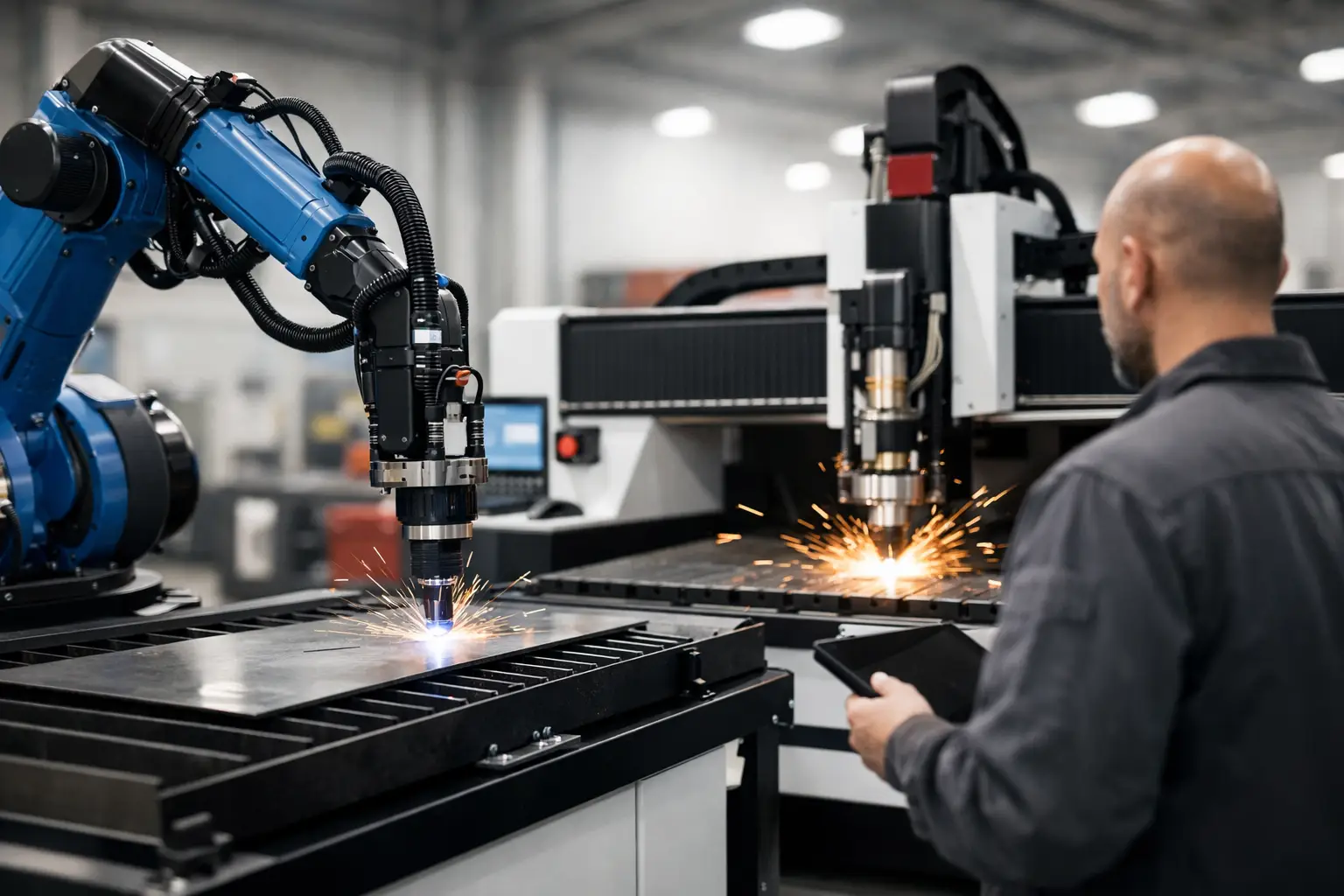
A machine sitting idle at 10:15 on a Tuesday does more damage than most workshops care to admit. The lost cutting time is obvious, but the real cost shows up later – missed delivery dates, overtime, rework, frustrated operators and jobs backing up across the floor. If you need to reduce fabrication downtime fast, the answer is rarely one magic fix. It usually comes down to removing the handful of repeat issues that keep stopping production.
For Australian fabrication businesses, that means looking past the immediate fault and being honest about the system around it. Downtime is often blamed on the machine, but the real cause can sit in setup, consumables, training, software, material handling or service response. The workshops that stay productive are not the ones that never have problems. They are the ones that solve the right problems early.
Reduce fabrication downtime fast by fixing the real bottlenecks
When production stalls, it helps to separate planned stoppages from unplanned ones. Planned downtime includes scheduled servicing, software updates, calibration checks and operator training. Unplanned downtime is the expensive part – faults, crashes, poor cut quality, consumable failures, missed settings, material mix-ups or waiting days for technical support.
Too many businesses attack the symptom instead of the cause. If cut quality drops, they change consumables. If nesting is slow, they push operators harder. If a table stops, they rush in a technician. Sometimes that works. Often it just repeats the same disruption next week.
A better approach is to ask three direct questions. What is stopping the machine most often? What takes longest to recover from? What keeps causing jobs to be delayed even when the machine is technically running? Those answers usually point to the areas where the fastest gains can be made.
Start with machine-process fit
A surprising amount of downtime begins before the machine is even installed. If the cutting technology does not match your workload, the workshop ends up fighting limitations every day. Plasma, fibre laser, routing and robotic beamline systems each have strengths, but none of them suits every job mix.
If you are cutting heavy plate in a demanding environment, a machine built for lighter gauge production may create ongoing reliability and throughput issues. If you are processing detailed thin material at volume, using the wrong process can mean slower cycle times, more secondary finishing and extra handling. That is not always recorded as downtime, but it still drags production backwards.
The quickest long-term win is making sure the machine configuration matches the materials, thickness range, throughput targets and operator skill level in your business. That includes extraction, table size, power source, software capability and loading workflow. A machine that is technically capable is not always a machine that is production-ready.
Maintenance matters, but only if it is disciplined
Most workshops say they do preventative maintenance. Fewer do it consistently under production pressure. There is a big difference between having a maintenance checklist and having a routine that actually protects uptime.
The basics still matter. Dirty rails, worn consumables, neglected filters, poor air quality, coolant issues, loose connections and ignored alignment drift can all lead to breakdowns or poor cut performance. None of these problems are dramatic when they start. Left alone, they become expensive.
The practical fix is simple. Schedule maintenance around production, assign responsibility clearly and keep records that tell you what is repeating. If one part keeps failing or one system keeps drifting out, that pattern is valuable. It may point to a deeper issue in setup, environment or machine specification.
There is also a trade-off here. Some businesses push maintenance too far apart to protect output, then lose far more time in emergency stoppages. Others over-service equipment and create unnecessary interruptions. The right balance depends on utilisation, materials, environment and machine type, but disciplined servicing nearly always beats reactive repairs.
Operator capability has a direct impact on uptime
A well-built CNC system can still underperform if operators are guessing their way through jobs. Training is one of the fastest ways to reduce fabrication downtime fast because it cuts out avoidable mistakes before they hit the floor.
In many workshops, downtime is not caused by a major mechanical fault. It is caused by incorrect parameter selection, poor job setup, avoidable torch collisions, wrong material entries, inefficient nesting or uncertainty when alarms appear. The machine stops, everyone gathers around it, and valuable time disappears while the team works out what should have happened in the first place.
Good training should cover more than basic operation. Operators need to understand why settings matter, how to identify early signs of trouble and when to stop before a minor issue becomes a crash or scrap event. Supervisors also need enough technical understanding to diagnose workflow problems, not just machine faults.
This is where local support makes a real difference. If help is available quickly and in plain language, operators gain confidence faster and bad habits are less likely to become normal practice.
Software and workflow often hide the biggest delays
Not all downtime happens with the machine off. A workshop can lose hours every week to programming delays, drawing issues, poor nesting, revision confusion and jobs waiting for approval. On paper, the machine may show strong utilisation. In reality, it is starved of good work.
That is why software needs to be treated as part of the production system, not an afterthought. Reliable CAD/CAM workflow, sensible nesting, accurate post-processing and clear file control can remove a surprising amount of wasted time. If operators are constantly editing jobs at the control because programming upstream is inconsistent, the problem is not on the shop floor alone.
The same applies to material flow. If sheets, sections or profiles are not ready when the machine is, you have a handling problem disguised as equipment downtime. For some shops, the fastest improvement comes from reorganising staging areas, standardising job packets or tightening communication between office and production.
Consumables, spare parts and service response are uptime issues
Workshops often accept delays that should never be normal. Waiting too long for a replacement part, running the wrong consumable to get through a shift, or spending half a day chasing technical support all add up.
If uptime matters, support planning matters. That means keeping critical consumables on hand, identifying essential spare parts in advance and knowing who will respond when something goes wrong. It also means buying equipment from a supplier that can support the machine properly after installation, not just sell it.
For Australian manufacturers, local backup is not a marketing extra. It is part of risk control. A machine can be excellent on paper, but if support is slow, offshore-only or disconnected from real workshop conditions, downtime stretches out fast. Businesses that rely on production every day need technical support that is practical, responsive and accountable.
This is one reason many industrial customers prefer working with a provider that designs, builds, installs and supports the system as a complete package. When the machine, software, training and service all come from one capable partner, fault-finding tends to be faster and handballing tends to disappear.
Measure the right things if you want downtime to drop
You cannot improve what nobody tracks properly. Many workshops know they are losing time, but they do not have clean data on where it is going. Without that, every interruption feels urgent and every fix feels temporary.
Start with a few practical measures. Track unplanned stoppages by cause, average recovery time, recurring faults, consumable life, scrap linked to machine issues and jobs delayed by programming or setup. You do not need a complex system to begin. Even a disciplined spreadsheet can reveal patterns quickly.
What matters is honesty. If poor scheduling is causing the machine to sit idle, call it out. If operator turnover is creating repeat errors, address it. If one machine is being used outside its sweet spot because there is no better process in place, that is a capacity planning issue, not just an operations problem.
The fastest wins usually come from a combined approach
When a workshop wants immediate improvement, the most effective path is usually a combination of small, high-impact changes. Tighten preventative maintenance. Refresh operator training. Clean up programming flow. Check whether the machine and process really suit the work. Review support readiness, including parts and service access.
None of that sounds dramatic, but it works because downtime is rarely dramatic at the start. It is usually ordinary, repetitive and tolerated for too long. The businesses that protect output are the ones willing to remove friction at every stage, from quoting and programming through to cutting, servicing and backup support.
If your workshop is losing production time week after week, the fix may not be a bigger machine or a rushed replacement. It may be a more honest look at where your process is vulnerable and a better support structure around the equipment you rely on. ART CNC works with Australian manufacturers on exactly that basis – not just supplying machinery, but helping businesses build a cutting operation that keeps moving when production pressure is on.
The useful question is not whether downtime can be eliminated completely. It cannot. The better question is how quickly your business can spot problems, respond properly and get back into production without the same issue returning next month.