Navigate
- Home
- Products & Services
- All Machines
- CNC Routers
- XT Router
- XR ROUTER – General Purpose High-Performance with ATC
- RT CNC ROUTER – Super Heavy Duty with ATC
- RTL CNC ROUTER – Heavy Duty Extra Long for Aluminium Processing
- XRS ROUTER – with Machine Vision Alignment System for Cutting Printed Signs
- XRD ROUTER – Steered Tooling for Insulation, Ducting and Textiles
- CNC Plasma
- CNC Laser
- Metaltek XB1200 Plasma Beamline
- Machines4U Listings
- CNC Routers
- Servicing & Repairs
- Software
- TruCut Consumables & Tooling
- Financing & Leasing
- All Machines
- Store
- CNC Knowledge Centre
- Company
- Gallery
- User Portal
If you are asking who makes CNC machines, you are usually not asking for a history lesson. You are trying to work out who will stand behind the machine when production is on the line, parts need to ship, and downtime is costing you money by the hour.
That question matters more than many buyers first realise. In the CNC market, the company with the logo on the machine is not always the company that designed it, built it, programmed it, installed it, or services it after the sale. Those differences affect cut quality, lead times, training, spare parts access, and how quickly problems get fixed when they inevitably come up.
Who makes CNC machines – and why that answer is not always simple
At a glance, it seems straightforward. A machine has a brand badge, a sales brochure and a specification sheet, so the manufacturer must be obvious. In practice, there are several business models behind CNC equipment, and they are not all the same.
Some companies genuinely design and build CNC machines. They engineer the frame, choose the motion components, integrate the cutting process, develop or configure software, test the package, and support it in the field. Others import complete machines from overseas factories and sell them locally under their own brand. Some act as distributors for offshore manufacturers. Others assemble a package from multiple third-party components and market it as a finished solution.
None of those models is automatically wrong. The issue is whether the supplier is clear about which role they actually play, and whether that model suits your operation. If your business relies on uptime, repeatability and local technical support, you need to know exactly who is responsible for what.
The main types of companies that make or supply CNC machines
The first group is the true manufacturer. This is the business that has hands-on control over engineering, machine configuration and support. If a customer needs a different bed size, a revised torch setup, upgraded extraction, software changes or integration with existing workflow, a real manufacturer can usually have that conversation at a technical level. They are not just reading from a catalogue.
The second group is the importer or reseller. They may supply capable equipment, but their control over the machine itself is often limited. If something needs redesigning, or a fault sits deeper than standard replacement parts and routine settings, support can depend on an offshore factory, overseas time zones and longer parts pipelines. For some buyers that may be acceptable. For production businesses with tight deadlines, it can become a problem quickly.
The third group is the local integrator. These businesses may source motion systems, control hardware, software and cutting components from different manufacturers, then build a solution around them. When done properly, that can be a strong option because the machine is assembled with a clear understanding of local conditions and customer requirements. The key question is whether the integrator also owns long-term support.
What Australian buyers should ask before assuming who makes CNC machines
The fastest way to cut through marketing is to ask direct questions. Who designed the machine structure? Who builds it? Who writes or configures the software? Who installs it? Who carries spare parts? Who answers the phone when the machine is down?
A serious supplier should be comfortable answering that without vagueness. If the response becomes slippery, or everything gets framed as “partner supported”, it is worth looking closer.
You should also ask where service technicians are based, what training is included, and whether support is handled by the same business that sold the machine. A machine is only part of the purchase. The real investment includes commissioning, operator confidence, process setup, consumables, maintenance and fault response.
For Australian fabrication and manufacturing businesses, local support is not a nice extra. It is often the difference between a brief interruption and a blown production schedule.
Why local manufacturing and support matter
A CNC cutting system is not just steel, motors and software. It is part of your production capacity. When it stops, quoting slows down, deliveries get pushed, labour gets wasted and customers start asking questions.
That is why the answer to who makes CNC machines should include more than a country of origin. It should tell you where the expertise sits. If the people who sold the machine also understand the engineering behind it, support tends to be faster and more useful. They can diagnose with context, not guesswork.
Local manufacturing or local engineering involvement also matters when your application is not standard. Many workshops cut mixed materials, unusual section sizes, varying plate thicknesses or job lots that do not fit a one-size-fits-all machine package. In those cases, tailored configuration makes a real difference to throughput and finish quality.
Australian businesses also need suppliers who understand local operating conditions. Workshop environments, power quality, dust, heat, heavy use and production expectations all affect how a machine should be specified and supported. Practical experience on the ground counts.
Not all CNC machine makers support the full process
One of the biggest misconceptions in the market is that buying a machine solves the production problem on its own. It does not. The machine has to fit the work you do, the material types you run, the output you need and the skill level of the people operating it.
A supplier that truly makes and supports CNC machines should be able to advise on process selection as well. That might mean helping you work out whether a CNC plasma cutter, CNC router, CNC fibre laser or beamline solution is the right fit for your workload. It might also mean saying that a larger machine is unnecessary, or that a different process will give better results over the long term.
That kind of advice only happens when the supplier is focused on outcomes rather than just moving stock. Honest guidance is often more valuable than a glossy machine brochure.
How to tell if a CNC supplier is the real technical partner
The signs are usually easy to spot once you know what to look for. A genuine technical partner will talk in practical terms about material type, cut edge quality, production volume, software workflow, extraction, maintenance access and operator training. They will ask about bottlenecks in your business, not just your budget.
They will also be realistic. Sometimes the right answer is a more tailored machine. Sometimes it is a simpler configuration with room to grow. Sometimes it is a used system that suits the workload without overcapitalising. Straight answers are a good sign.
By contrast, if the conversation stays shallow, focuses heavily on headline price, or avoids detail around service and support, that usually tells you something. In industrial equipment, the hard part is not making the sale. The hard part is keeping the customer productive for years afterwards.
So, who makes CNC machines that Australian industry can rely on?
Globally, there are many CNC machine manufacturers across different cutting technologies. But for Australian buyers, the better question is this: who makes CNC machines in a way that gives you confidence after installation day?
That means looking for a supplier with direct engineering knowledge, local service capability, clear ownership of support, and the ability to configure the machine around your workload rather than forcing your workload around the machine.
It also means checking whether the business can support the whole life of the system. Software, consumables, replacement parts, servicing and repairs are not side issues. They are part of the value of the machine from day one.
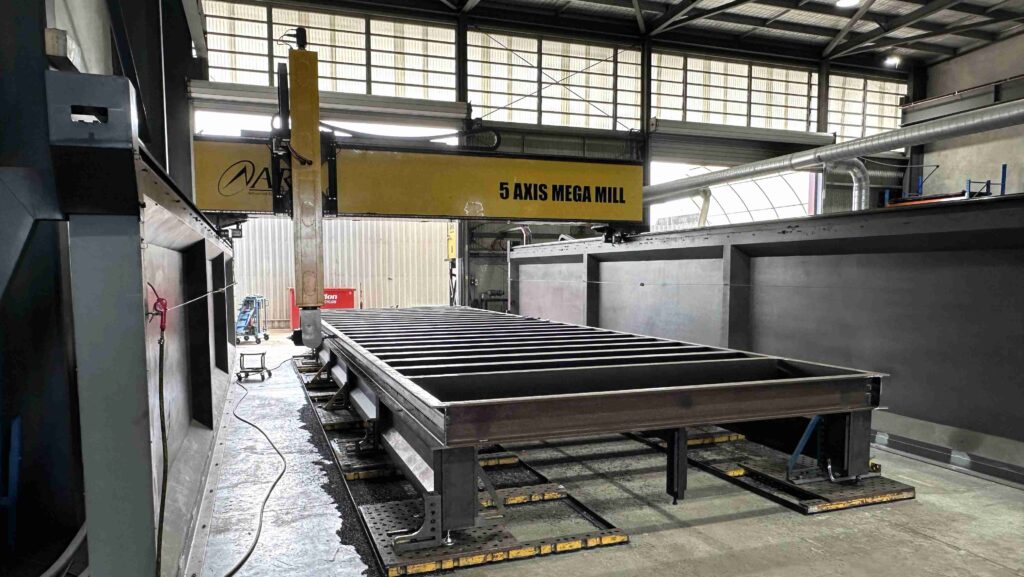
This is where an Australian manufacturer and support partner can stand apart. ART CNC is one example of a business built around that model – designing, building, programming, supplying and supporting CNC cutting systems with local accountability. For many workshops, that direct line back to the people who know the machine properly is what reduces risk.
The right machine is never just about the badge on the gantry. It is about whether the people behind that badge can help you keep producing.
If you are comparing suppliers, ask the uncomfortable questions early. Find out who actually makes the machine, who will configure it for your work, and who will answer when the pressure is on. That is usually where the right decision becomes clear.
Contact details.
- Australia Phone
- +61 7 3393 6555
- View our email address
- Address
- 73 Boyland Ave, Coopers Plains. QLD 4108. Australia