Choosing a CNC Router for Plastic Sheets.
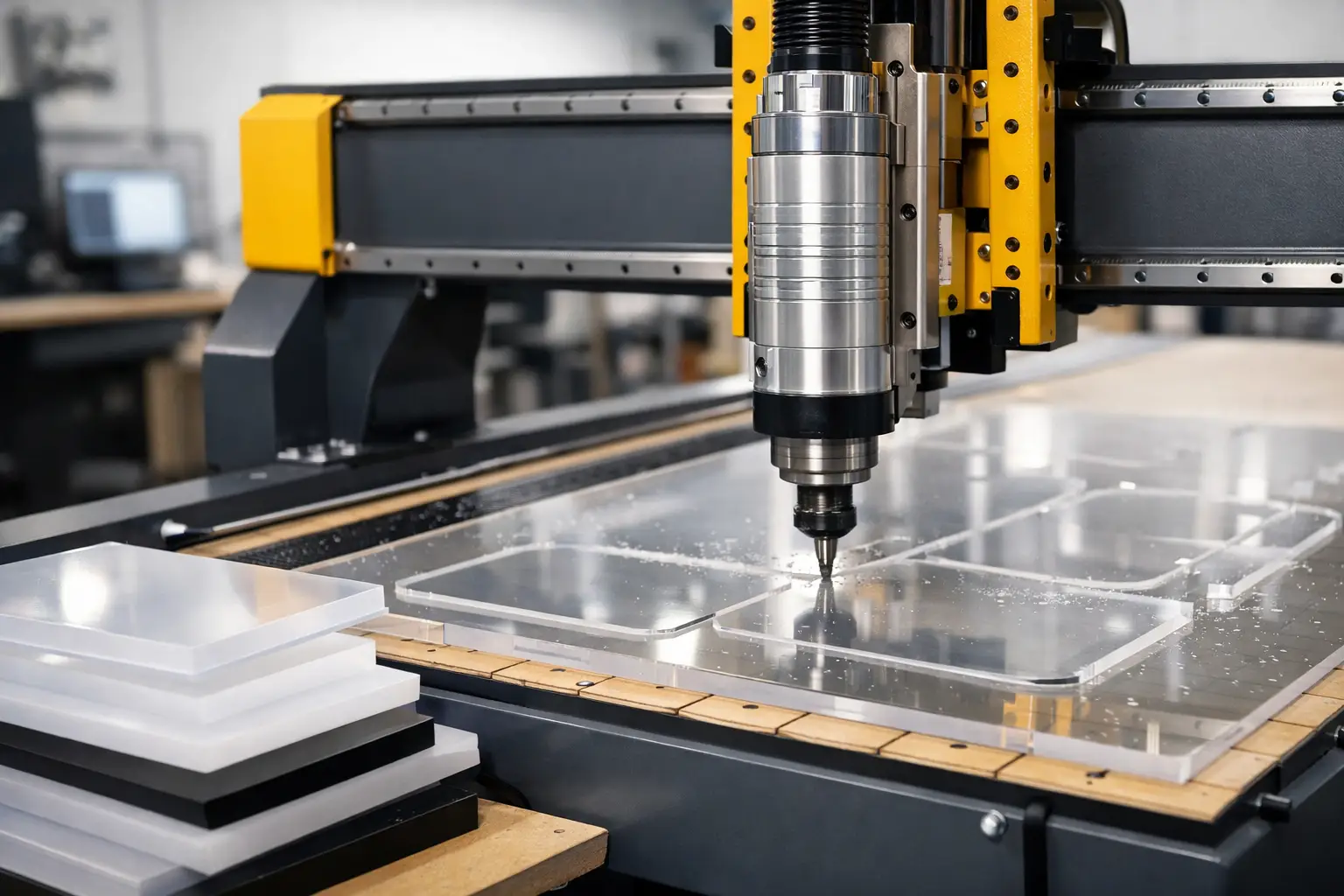
If you are cutting acrylic one day, PVC the next and HDPE after that, the wrong machine setup will show up fast – melted edges, sheet movement, chipped corners and wasted time. Choosing the right cnc router for plastic sheets is less about headline spindle power and more about how the full system handles heat, chip load, hold-down and repeatability in a real production environment.
Plastic is often treated like an easy material. In practice, it can be one of the more unforgiving jobs on the floor. Unlike timber, many plastics soften quickly if the toolpath, cutter geometry or feed rate is off. Unlike metal, they can flex, lift or mark easily if the vacuum table is not configured properly. That is why machine selection needs to start with the material mix you cut now, the throughput you need, and how much variation your operators are dealing with across each shift.
What matters most in a cnc router for plastic sheets
A good CNC router for plastics is not simply a standard router with a different brochure. It needs the right balance of spindle performance, table design, motion control and software so the machine can cut cleanly without building heat into the sheet.
For most production shops, consistency matters more than theoretical top speed. A rigid frame and stable gantry help maintain edge quality over long runs. Accurate motion control keeps detail clean on letters, pockets and drilled holes. Reliable vacuum hold-down is equally critical, especially when processing full sheets that may have protective film, minor bow, or nested parts with small tabs.
The spindle also needs to suit the work. More power is not always the answer, but stable power delivery across the working range is important. Plastics often require sharp tooling, clean evacuation of chips and feed rates that keep the cutter working rather than rubbing. If the machine cannot maintain those conditions, the finish suffers and tool life drops.
Software deserves more attention than it usually gets. Nesting, lead-ins, ramping, cutter compensation and workholding strategy all affect cut quality. A machine with strong software integration and support will usually outperform a more impressive-looking machine that leaves your team to sort out the process on their own.
Different plastics, different machining behaviour
Grouping all plastic sheets together is where many buying decisions go wrong. Acrylic, polycarbonate, ACM, PVC, UHMWPE and HDPE all behave differently under the tool.
Acrylic can produce an excellent finish, but it is sensitive to heat. Too little feed or a dull cutter will quickly create melting or cloudy edges. Polycarbonate is tougher and less brittle, but it can burr if tooling and speeds are not right. HDPE and UHMWPE machine well in many cases, yet they can move if the sheet is not held securely, particularly on thinner stock or when smaller parts are nested close together.
Expanded PVC is common in sign and display work, but it marks more easily than some operators expect. Aluminium composite material introduces another variable because you are cutting a layered sheet, not a single homogeneous material. If your workshop runs more than one plastic type, the machine and control strategy need to cope with that variation without turning every material change into a trial-and-error exercise.
This is where honest advice matters. There is no single perfect specification for every shop. The best choice depends on what you cut most often, how critical the finish is, whether you are finishing by hand afterwards, and how much downtime your schedule can tolerate.
Table design and hold-down are not side issues
When buyers compare machines, they often focus on spindle size, travel and price first. For plastic sheet processing, table design should be much higher on the list.
A properly designed vacuum table can be the difference between smooth throughput and constant operator intervention. Full-sheet processing, nested small parts and thin flexible materials all place different demands on hold-down. If zoning is poor or airflow is not managed well, parts can shift, chatter or lift during the cut. That affects accuracy, edge finish and safety.
Spoilboard management also matters. Vacuum performance is only as good as the condition of the board and the way it is surfaced and maintained. Shops that process a high mix of sheet sizes benefit from a table layout that allows practical zoning rather than forcing operators into awkward workarounds. If your jobs include small components, it is also worth considering how the machine handles onion skinning, tabbing or alternative hold-down methods where vacuum alone is not enough.
Tooling, feeds and heat control
A cnc router for plastic sheets lives or dies on process control. The machine is only one part of the result.
Single-flute and O-flute cutters are commonly used because they evacuate chips well and help reduce heat build-up, but the correct choice still depends on the material and the finish required. The real objective is simple: cut chips, do not rub the plastic. Once the cutter starts rubbing, heat rises quickly and the quality falls away.
That is why feed rate, spindle speed and depth of cut need to be treated as a matched set. Slowing the machine down is not always safer. In plastics, running too slowly can create more heat than running faster with the right chip load. Good machine control helps, but operator confidence and support are just as important. Your team needs proven cutting data and local backup when a new material or part design changes the job.
Mist cooling or air blast may also be worth considering depending on the application. Not every plastic job needs extra cooling, but in some production settings it can improve chip evacuation and surface finish. The right answer depends on material type, thickness, finish expectations and downstream cleaning requirements.
Buying for production, not just for the quote
A machine that looks competitive on paper can become expensive if it creates bottlenecks, rejects or support delays. For Australian manufacturers, one of the biggest practical questions is what happens after installation.
If a drive fault appears, if your vacuum performance drops, or if a new plastic grade behaves differently from the last one, you need support that understands the machine and the process. That is very different from dealing with a seller who can provide a brochure but not much else. Local engineering knowledge, installation experience and direct technical backup reduce downtime and shorten the learning curve for your operators.
It is also worth looking at the machine as part of a broader workflow. Are sheets loaded manually or with assist systems? Does the router need to integrate with existing CAD or production software? Are you batch processing repeat jobs or handling one-off custom work? The right answer for a signmaker can be different from the right answer for an industrial plastics processor or a fabrication shop producing machine guards and components.
At ART CNC, that practical fit is the conversation worth having. The right machine is the one that matches your material, throughput and support expectations – not the one with the most inflated claim sheet.
When a standard configuration is not enough
Some workshops can run efficiently on a straightforward flatbed router configuration. Others need more tailored options. Larger sheet sizes, heavier stock, frequent tool changes, dust extraction requirements and tighter tolerance work can all justify a more application-specific setup.
Automatic tool changing is a good example. If your work shifts between cutting, drilling, chamfering and engraving, it can save significant time and reduce operator handling. If your jobs are repetitive and use one tool most of the day, it may be less critical. The same applies to bed size. A larger bed offers flexibility, but only if it suits your material flow and floor space.
That is why the buying process should be consultative. A proper discussion looks at your current jobs, future growth, operator capability and service expectations. It should also include trade-offs. A faster machine may need stronger extraction and better workholding discipline. A more advanced configuration may improve output but require training and process standardisation to get the full benefit.
The real test of a CNC router for plastic sheets
The real test is not whether a machine can cut plastic in a demonstration. It is whether it can cut your plastic sheets all week, at the quality your customers expect, without constant adjustment and unplanned downtime.
That means asking better questions before you buy. What plastics are you processing most often? What thickness range matters? How many sheets move through the workshop in a shift? Are you chasing edge finish, throughput, flexibility or all three? And when something needs attention, who actually answers the phone and understands the machine well enough to help?
If those questions are answered properly, the machine decision becomes clearer. You are not just buying a router. You are investing in a process that needs to stay productive, predictable and supportable over the long term. Get that part right, and the machine becomes a profit centre rather than another source of workshop friction.
The smartest buying decision is usually the one that looks past the sales pitch and focuses on how the machine will behave on your floor, with your materials, under your production pressure.