A Practical Guide to Fibre Laser Cutting.
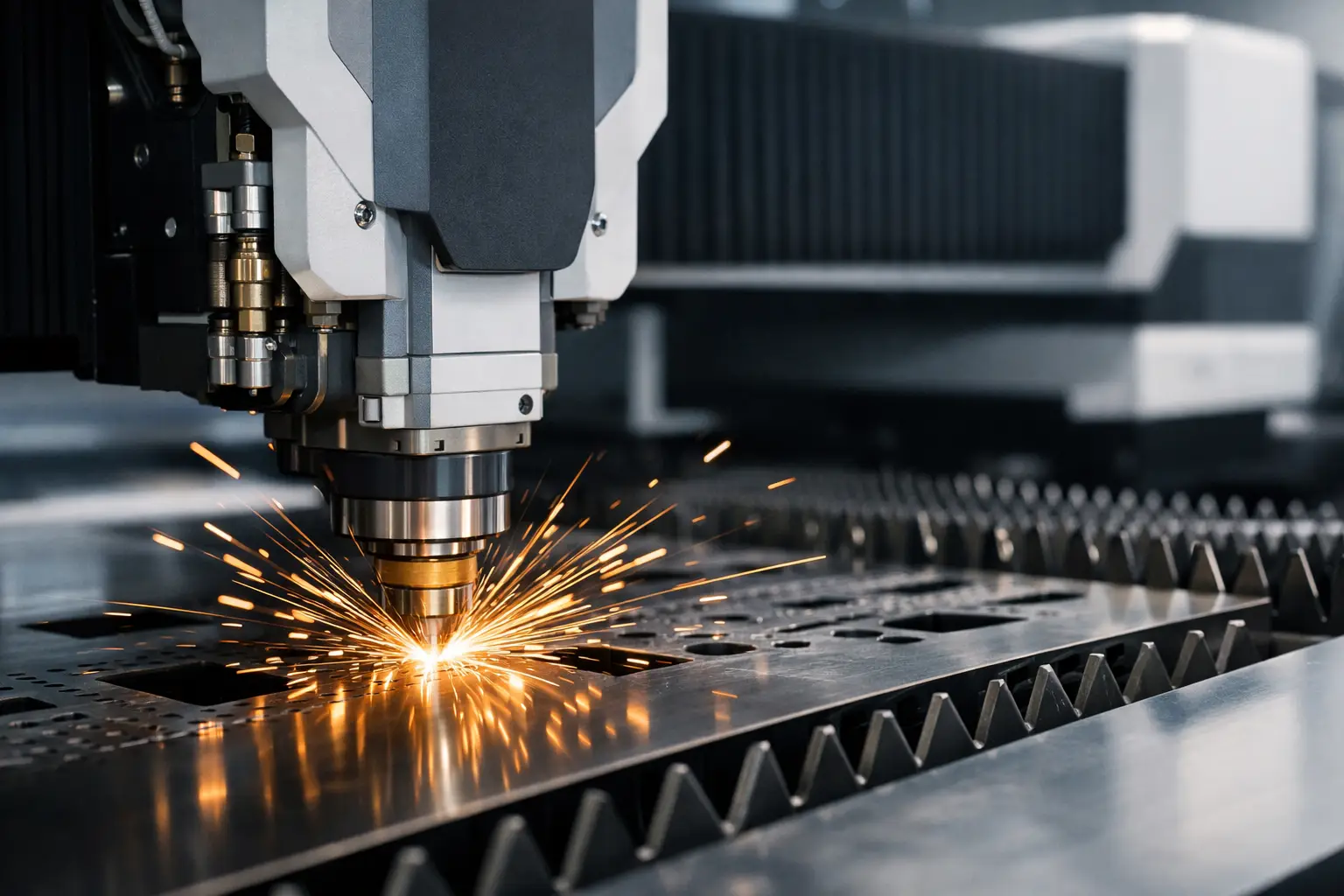
If you are weighing up a fibre laser for your workshop, the real question is not whether the technology works. It does. The question is whether this guide to fibre laser cutting lines up with your materials, throughput, labour, floor space and support needs. That is where good buying decisions are made, and where expensive mistakes are usually avoided.
Fibre laser cutting has become a serious production tool for Australian fabrication, engineering and manufacturing businesses that need speed, repeatability and a cleaner finished edge than many other cutting processes can deliver. But it is not the right answer for every job, every material thickness or every workshop. The value comes from matching the machine to the work, not forcing the work to suit the machine.
What fibre laser cutting is really good at
A fibre laser uses a solid-state laser source to direct concentrated energy through an optical system and cutting head onto the sheet metal surface. In practical terms, that means high cutting speeds, strong positional accuracy and a narrow kerf, particularly on thin to medium gauge materials.
For many businesses, the biggest gain is not just raw speed. It is the combination of speed, edge quality and reduced secondary handling. If parts are coming off the bed with minimal burr, consistent hole quality and less need for grinding or cleanup, the benefit shows up across the whole workflow.
This is why fibre laser systems are commonly used for mild steel, stainless steel, aluminium, brass and copper. The exact result depends on material grade, thickness, assist gas, nozzle condition, nesting strategy and operator setup, but the process is well suited to production environments where consistency matters.
A guide to fibre laser cutting applications
The strongest applications for fibre laser cutting are jobs with repeatable production runs, nested sheet utilisation targets, fine features and customer expectations around presentation quality. Sign components, brackets, enclosures, stainless parts, architectural pieces, switchboard elements and general fabrication parts all fit that profile.
Where shops often see the fastest return is in replacing slower manual processes or reducing the bottleneck between design and finished component. If your team is losing time on rework, waiting on outsourced profiles or tying up labour on cleanup, a fibre laser can change more than one part of the business at once.
That said, material thickness matters. A fibre laser is exceptionally efficient on thin material and still highly capable through a broader range depending on machine power and configuration. Once sections become very heavy, the decision becomes more nuanced. Some workshops will still prefer another cutting process for certain plate work because the economics, edge condition or capital cost stack up better for that mix.
How it compares with other cutting processes
Most buyers are not choosing fibre laser cutting in a vacuum. They are comparing it against an existing process, usually plasma, outsourced profiling or a mixed workshop setup.
Compared with plasma, fibre laser cutting generally delivers finer detail, a smaller heat affected zone and better edge quality on thinner materials. Hole quality is usually stronger, and parts often need less finishing. Plasma can still be a very capable and cost-effective option, especially for thicker material ranges and applications where fine cosmetic finish is less critical.
Compared with outsourcing, bringing fibre laser capability in-house gives you control. You can respond faster to urgent jobs, reduce lead time pressure and make design changes without waiting on external suppliers. But that control also comes with responsibility. You need trained operators, service support, process discipline and enough production volume to justify ownership.
This is why a straight comparison based only on cut speed can be misleading. The right machine decision depends on the full production picture, including quoting, scheduling, material handling, labour allocation and maintenance capacity.
What affects cut quality and productivity
A good fibre laser does not run well by accident. Machine quality matters, but so do setup and operating habits.
Laser source power is one factor, but it is not the whole story. Buyers often focus on kilowatts because it is easy to compare, yet overall performance also depends on motion control, bed design, cutting head quality, extraction, software, gas delivery and calibration. A poorly matched machine can look good on paper and still underperform in production.
Assist gas selection has a major impact as well. Nitrogen is often used where a clean, oxide-free edge is required, especially on stainless and aluminium. Oxygen can support mild steel cutting in certain applications. Gas quality, pressure stability and operating cost all need to be considered, because they affect both finish and running expenses.
Then there is nesting and programming. Efficient software can improve sheet utilisation, reduce cut time and simplify part flow. If your business runs varied jobs, short lead times and frequent design changes, software capability is not a side issue. It is part of productivity.
Operator training also plays a bigger role than some buyers expect. Nozzle alignment, lens care, focus settings, material libraries and piercing strategy all influence output. The best results come when the machine, software and training package are treated as one system.
Costs that matter beyond the purchase price
Capital cost matters, but serious buyers know it is only one part of the equation. Running cost, support access and downtime risk matter just as much.
Power consumption is one advantage fibre laser systems can offer over older cutting technologies, but overall operating cost also includes assist petrol, consumables, maintenance, extraction, software, servicing and labour. If a machine is faster but harder to support, the gain can disappear quickly.
This is where local technical backup becomes a commercial issue, not just a service issue. A workshop that loses production for days while waiting on diagnosis, parts or remote advice is paying a much higher price than the original machine quote suggested. For Australian businesses, local support and parts access should be part of the buying criteria from the start.
It is also worth being realistic about utilisation. If the machine will sit idle for long stretches, ownership may not deliver the return you expect. If it will replace outsourced work, remove bottlenecks and support new quoting opportunities, the numbers often look very different.
Choosing the right fibre laser system
The right system starts with your job mix. What materials do you cut every week, not just occasionally? What thickness range drives most of your revenue? How many sheets move through the workshop each day? Do you need a single shift machine, or something that can support heavier production loads?
Bed size should suit the materials you actually process and the way your workshop handles stock. Bigger is not automatically better if it increases footprint, cost and handling complexity without improving throughput.
Automation is another area where buyers need honest advice. Load and unload systems, tower storage and material handling integration can transform output in the right environment. They can also be unnecessary overhead in a lower-volume workshop. It depends on labour availability, shift structure and whether your bottleneck is cutting time or handling time.
Software compatibility should also be checked early. Your programmers and operators need a workflow that supports quoting, nesting, job release and repeat production without unnecessary manual intervention. If the control system fights your team, productivity suffers regardless of machine specification.
A practical supplier should ask tough questions about your applications, not just present a brochure. That is usually a good sign you are talking to a partner who understands production reality.
Common mistakes buyers make
The first mistake is buying on headline specification alone. More power and a lower sticker price can look attractive, but if service, software and machine design are weak, the long-term result is rarely positive.
The second is underestimating training. Fibre laser technology is highly capable, but it still relies on proper setup, maintenance discipline and operator understanding. Good commissioning and practical training save money.
The third is choosing a machine without thinking through workflow around it. Sheet loading, unload space, extraction, petrol supply, material storage and part sorting all affect whether the laser becomes a production asset or just another choke point.
And finally, some businesses assume a fibre laser should replace every other cutting process in the workshop. Sometimes it will take over most of the work. Sometimes the smarter model is a complementary setup where each process handles the jobs it is best at.
Is fibre laser cutting right for your business?
If your business depends on accurate sheet metal processing, repeatable quality, shorter lead times and lower handling effort, fibre laser cutting deserves serious consideration. If your work is dominated by heavier plate, inconsistent material flow or very low utilisation, the answer may be less straightforward.
The best decisions come from looking at real production data, not marketing claims. Review your material range, labour cost, finishing time, current bottlenecks and support expectations. Then assess the machine as part of a full operating system that includes software, installation, training and after-sales backup.
That is the approach serious manufacturers take, and it is usually the reason they get better long-term value. A fibre laser should not just cut fast on day one. It should keep delivering reliable output, predictable quality and dependable support long after the sale is done.
If you are considering the move, start with the work on your floor now. The right machine choice usually becomes clearer when you measure it against the jobs your business needs to run every day.