Steel Beam Cutting Machine Guide.
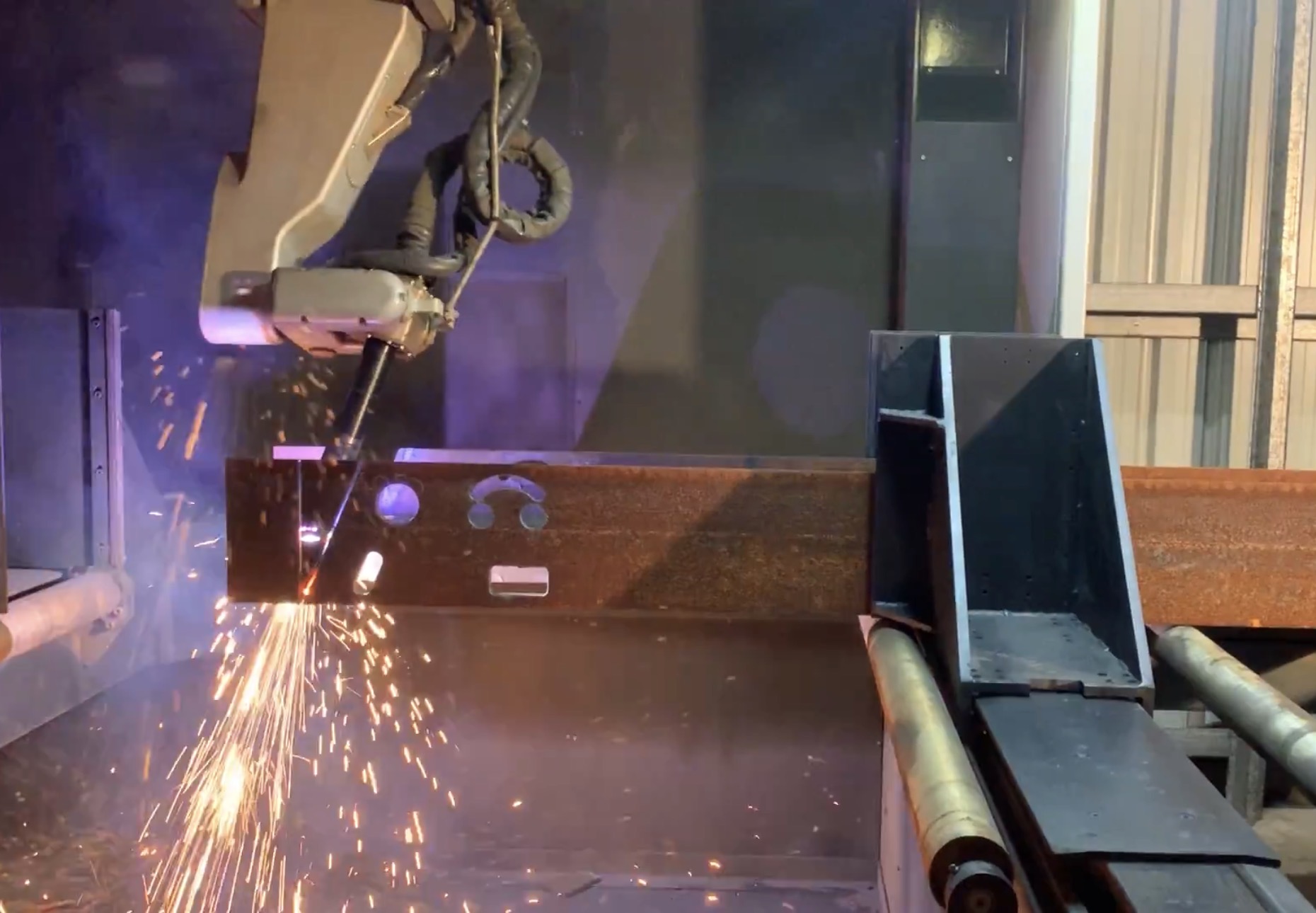
A missed hole position in structural steel does not stay a small problem for long. It becomes rework, delayed fit-up, site frustration and margin erosion. That is why a steel beam drilling and cutting machine matters – not as a showroom feature, but as a production tool that directly affects throughput, accuracy and labour efficiency.
For workshops processing UB, UC, PFC, RHS and other structural sections, the real question is not whether automation looks impressive. It is whether the machine suits your beam sizes, part mix, output targets and staffing. Get that part right and you remove a major bottleneck. Get it wrong and you simply move the bottleneck somewhere else.
What a steel beam cutting machine actually does
At its core, this type of system is built to process structural members with repeatable accuracy. Depending on configuration, it can cut holes, mark part locations, cut beams to length, create coping or profile features, and integrate with material handling to reduce manual intervention between operations.
That sounds straightforward, but there is a big difference between a machine that can perform those tasks and one that can perform them reliably in a live production environment. Beam processing is about how the whole system handles section variation, stock movement, datum control, swarf management, programming workflow and operator input.
For many fabricators, the gain is not just faster cycle times. It is consistency. When parts come off the machine correctly drilled and cut the first time, downstream assembly runs smoother and site installation becomes more predictable.
Where the biggest gains usually come from
Most buyers start by looking at raw cutting speed. That is fair enough, but speed on paper is only one part of the picture. In practice, beamline productivity usually improves because several small delays are removed at once.
Manual marking drops away. Measuring and repositioning between operations is reduced. Hole placement becomes repeatable across batches. Operators spend less time handling individual pieces and more time keeping material flowing. Programming is cleaner when jobs are imported directly from detailing software or generated through purpose-built machine software.
That combination tends to have a bigger effect on output than one headline specification. A workshop that is currently drilling, marking and cutting across separate stations can often save substantial labour hours simply by consolidating those processes into one coordinated system.
There is another benefit that does not always get enough attention: less dependence on individual operator judgement for every part. Skilled people are still essential, but the process becomes less vulnerable to inconsistency from shift to shift.
Choosing the right steel beam cutting machine
This is where honesty matters. Not every workshop needs a high-output beamline with every available option. Some need flexibility across mixed work. Others need pure volume. Some need to process long lengths efficiently with minimal labour. Others are dealing with frequent short-run jobs and changing section types.
The right steel beam cutting machine depends on four practical factors: the material you run, the volume you need to hit, the level of integration you want, and the support available once the machine is on your floor.
Material range and section size
Start with what you actually process, not what you might process once in a blue moon. Beam size capacity, flange and web access, section type compatibility and maximum stock length all need to align with your normal workload. Overspecifying capacity can add cost without adding useful output. Underspecifying creates production headaches from day one.
If your work includes a mix of universal beams, channels, rectangular sections and custom profiles, the machine needs to accommodate that variation without turning setup into a daily fight.
Hole quality and spindle performance
Hole quality matters just as much as speed. Poor hole finish, inaccurate positioning or tool instability can cause fit-up issues that wipe out any cycle-time advantage. A solid setup, proper clamping and dependable tool management make a real difference, especially when you are processing heavy structural material all day.
The conversation should also cover tool life and consumables. A machine that runs quickly but burns through tooling or demands frequent intervention may not be the cheapest machine to own.
Cutting method and part complexity
Some applications are mainly straight cuts to length with holes. Others need more complex profile cuts, notches or coping. The more varied your beam processing, the more important software capability and motion control become.
If your output is dominated by repetitive structural parts, a simpler setup may be the smarter investment. If your work changes weekly and includes detail-heavy fabrication, flexibility becomes worth paying for.
Software and data flow
Good hardware can be undermined by poor programming workflow. If it takes too long to prepare jobs, clean up imported files or manage revisions, the machine will sit idle more often than it should.
The software should support practical production, not just look good in a demo. Can your team create and edit jobs efficiently? Can operators recover quickly from interrupted runs? Can part data move cleanly from office to workshop? Those questions have a direct effect on utilisation.
Support is not an extra – it is part of the machine
For Australian fabricators, support should be part of the buying decision from the start. A beam processing system is not a disposable piece of equipment. It is a production asset that needs commissioning, training, maintenance and the occasional fast response when something goes wrong.
This is where many buyers have learned the hard way that machine price is only part of total value. If technical backup is slow, if spare parts are difficult to source, or if the supplier cannot properly diagnose software and mechanical issues, downtime gets expensive very quickly.
That is why local engineering knowledge matters. A supplier that designs, builds, programs and supports its own systems brings a very different level of accountability. Problems get solved faster because the support team understands the machine beyond the sales brochure. ART CNC has built its reputation around exactly that kind of practical, direct support.
Common mistakes buyers make
One of the most common mistakes is buying for maximum theoretical capacity instead of realistic production needs. Bigger is not always better. If your workshop does not have the material flow, staffing or job volume to keep a large system productive, you are paying for capability you will not use.
Another mistake is underestimating handling and layout. A beam machine can only perform well if material can enter and leave the system efficiently. Infeed, outfeed, cross transfer, stock storage and forklift access all need to be considered early. Too many businesses focus on the machine footprint and forget the working footprint.
There is also the issue of training. Even a well-designed system needs proper operator onboarding and clear process discipline. If operators are left to work things out under pressure, you increase the chance of errors, tool damage and avoidable downtime.
Finally, some buyers chase specification sheets and ignore service response. That usually looks fine until the first unplanned stoppage.
When a beamline makes financial sense
A steel beam cutting machine generally makes sense when beam processing is already a bottleneck or is about to become one. If your team is spending too much time measuring, marking, moving and manually drilling, the labour cost adds up quickly. So does the cost of rework.
The return is strongest where there is steady structural throughput, recurring part types, or pressure to increase output without continually adding labour. That does not mean every operation needs the same level of automation. A smaller fabricator may benefit from a carefully scoped system that removes the worst inefficiencies without overcommitting capital.
Larger operations usually look harder at integration, unattended running potential and software connectivity, because gains compound across more shifts and more tonnage.
Either way, the sensible approach is to evaluate real jobs, real cycle times and real handling requirements. Not generic assumptions.
What to ask before you buy
A serious supplier should be able to talk plainly about your material range, production targets, likely bottlenecks and support expectations. They should also be willing to tell you when a certain configuration is more machine than you need.
Ask how the machine is configured for your beam sizes. Ask what training is included. Ask how service is delivered in Australia, how quickly parts can be supplied, and what remote and on-site support looks like. Ask what the software requires from your office team and your operators.
Most importantly, ask how the system will fit your workflow from stock arrival to finished part dispatch. That answer will tell you more than any headline feed rate.
The best machine for your business is not the one with the longest option list. It is the one that keeps your workshop moving, your parts accurate and your downtime under control year after year. That is the standard worth buying to.