Are Chinese CNC Machines Any Good?.
A cheap machine looks very different at 4 pm on a Friday when production has stopped and nobody can tell you why. That is usually the real context behind the question, are Chinese CNC machines any good? For an Australian workshop, the answer is not a simple yes or no. Some are good, some are poor, and plenty sit in the messy middle where the purchase price looks attractive but the long-term cost tells a different story.
The first thing to get clear is that “Chinese CNC machines” is not one category. China produces everything from low-cost entry-level machines built to hit a price point through to well-specified equipment made in serious factories with decent controls, components and assembly standards. Treating all of it as rubbish is lazy. Treating all of it as a bargain is just as risky.
Are Chinese CNC Machines Any Good for Australian Workshops?
They can be, if the machine suits the job, the supplier is credible, and the support structure is real. That last point matters more than many buyers expect. A CNC machine is not just steel, motors and a control cabinet. It is also software setup, installation quality, post-sale training, spare parts access, troubleshooting and how quickly you can get back into production when something goes wrong.
A shop cutting occasional low-volume jobs may tolerate a few quirks if the machine was bought cheaply enough. A fabrication business running tight lead times and booked-out capacity usually cannot. If a breakdown leaves your operator standing around, your jobs late and your customers chasing updates, the purchase price stops being the main number that matters.
This is where buyers often get caught. They compare quoted machine prices line by line, but they do not compare response time, commissioning quality, control familiarity, parts availability or whether anyone local actually answers the phone.
Where Chinese CNC Machines Often Stack Up Well
The obvious advantage is price. Many imported machines come in significantly below Australian-built or European alternatives, and for some businesses that opens the door to automation sooner than would otherwise be possible. If the machine is being used for lighter-duty work, less complex production or lower utilisation, that can be enough to make the numbers work.
There are also Chinese manufacturers producing capable machines with known control systems, respectable linear motion components and acceptable cut quality. In router, plasma and laser categories, the gap between the cheapest end of the market and the better import offerings is huge. A well-specified machine from a serious manufacturer is not the same thing as a container-load special sold by someone with little technical depth.
Another reason some buyers do well with imported equipment is internal capability. If you have experienced maintenance staff, a strong electrician, control knowledge in-house and the patience to work through setup issues, you can absorb some of the rough edges. A workshop with its own technical bench strength has more room to take on risk than one relying entirely on outside support.
Where the Problems Usually Start
The weak point is rarely the brochure. It is everything around the machine.
Build consistency can vary. Two machines that look identical on paper may arrive with different wiring quality, fit-out standards, calibration accuracy or documentation. Components may be substituted between production runs. Software can be poorly translated, awkward to use or difficult to integrate into an existing workflow. None of these issues are always present, but they show up often enough to deserve serious attention.
Then there is after-sales support. Some importers are little more than sales desks. They can get a machine landed and invoiced, but installation, training and fault diagnosis become your problem the moment things get technical. Time zones, language barriers and spare parts delays turn a routine issue into days or weeks of downtime.
Consumables and replacement parts also matter more than many buyers expect. A machine can be mechanically sound, but if a failed drive, torch height control board or laser component takes too long to replace, production suffers just the same. Support is not a marketing extra. It is part of the machine.
The Better Question Is About Risk, Not Origin
Country of origin matters less than engineering standard, supplier capability and lifecycle support. There are poor machines built everywhere. There are also excellent machines built in countries that buyers dismiss too quickly.
What Australian businesses need to assess is risk across the full ownership period. How likely is the machine to hold tolerance, maintain cut quality and run consistently under your workload? How fast can faults be diagnosed? Who installs it? Who trains your staff? Who carries parts? Who can log in remotely, and who can physically get to site if remote support does not solve it?
If those answers are vague, the machine is higher risk no matter how attractive the quote looks.
How to Judge Whether a Chinese CNC Machine Is Any Good
Start with the supplier, not just the machine. Ask who engineered the package, who commissioned it locally and who supports the control, software and mechanics after handover. If the seller cannot explain the machine in practical workshop terms, that is a warning sign.
Look closely at the component stack. What control system is fitted? What drives, motors, linear rails, rack, spindle, source or torch package are being used? Are they recognised components with local availability, or obscure parts that could become a headache later? A machine is only as serviceable as the ecosystem around it.
Then ask how the machine performs in conditions similar to yours. Material type, thickness range, production volume, shift pattern and dust or heat exposure all affect suitability. A machine that works acceptably in light use may struggle in a busy fabrication environment.
Finally, get specific about support. Not “yes, we support it”, but how. Is there phone support in Australian hours? Remote access? On-site technicians? Spare parts in Australia? Preventive servicing? Operator training beyond basic handover? Good suppliers answer these questions clearly and without spin.
Price Matters – But Cost of Ownership Matters More
A low entry price can still be the right move if the machine genuinely fits the workload and the support model is sound. But buyers should calculate more than finance repayments.
Factor in commissioning, software compatibility, operator learning time, maintenance burden, expected uptime and the cost of delayed jobs. One major breakdown during a busy month can wipe out a lot of the initial saving. On the other hand, paying more for a machine with proper local support can be cheaper over five years if it protects throughput and reduces downtime.
This is especially true for businesses that do not have spare capacity. If your machine stops and there is no backup process, every hour counts. Workshops often focus on what the machine costs to buy and underestimate what it costs when it cannot earn.
When an Imported Machine Can Be the Right Choice
If your workload is lighter, your budget is tight, and you have realistic expectations, an imported Chinese CNC machine may be a sensible starting point. It can also make sense for secondary operations, overflow work or less demanding applications where absolute top-end performance is not essential.
It may also suit businesses that have strong technical capability in-house and are comfortable taking a more active role in maintenance and problem-solving. In that setting, the lower purchase price can outweigh the added management burden.
The key is buying with your eyes open. If you are accepting more risk to hit a lower price point, that should be a conscious decision rather than an unpleasant surprise six months later.
When Local Engineering and Support Become Worth It
For many Australian manufacturers, the real requirement is not simply a machine that can cut. It is a machine that keeps cutting, backed by people who understand the process, know the software and can respond quickly when production is under pressure.
That is where locally engineered and supported equipment starts to separate itself. You are not only buying hardware. You are buying machine configuration that suits your work, better installation standards, direct access to technical help and a shorter path to a solution when something goes wrong. For high-use workshops, that often carries more value than the saving on day one.
This is also why businesses often choose to talk with companies like ART CNC. Not because every imported machine is bad, but because honest advice, tailored configuration and direct support reduce the chance of buying the wrong thing.
A good CNC machine is the one that fits your production, your staff and your tolerance for risk. If you are comparing options, stop asking where it was built as your first question. Ask who will stand behind it when your workshop needs answers quickly.
CNC Machine Manufacturers in Australia.
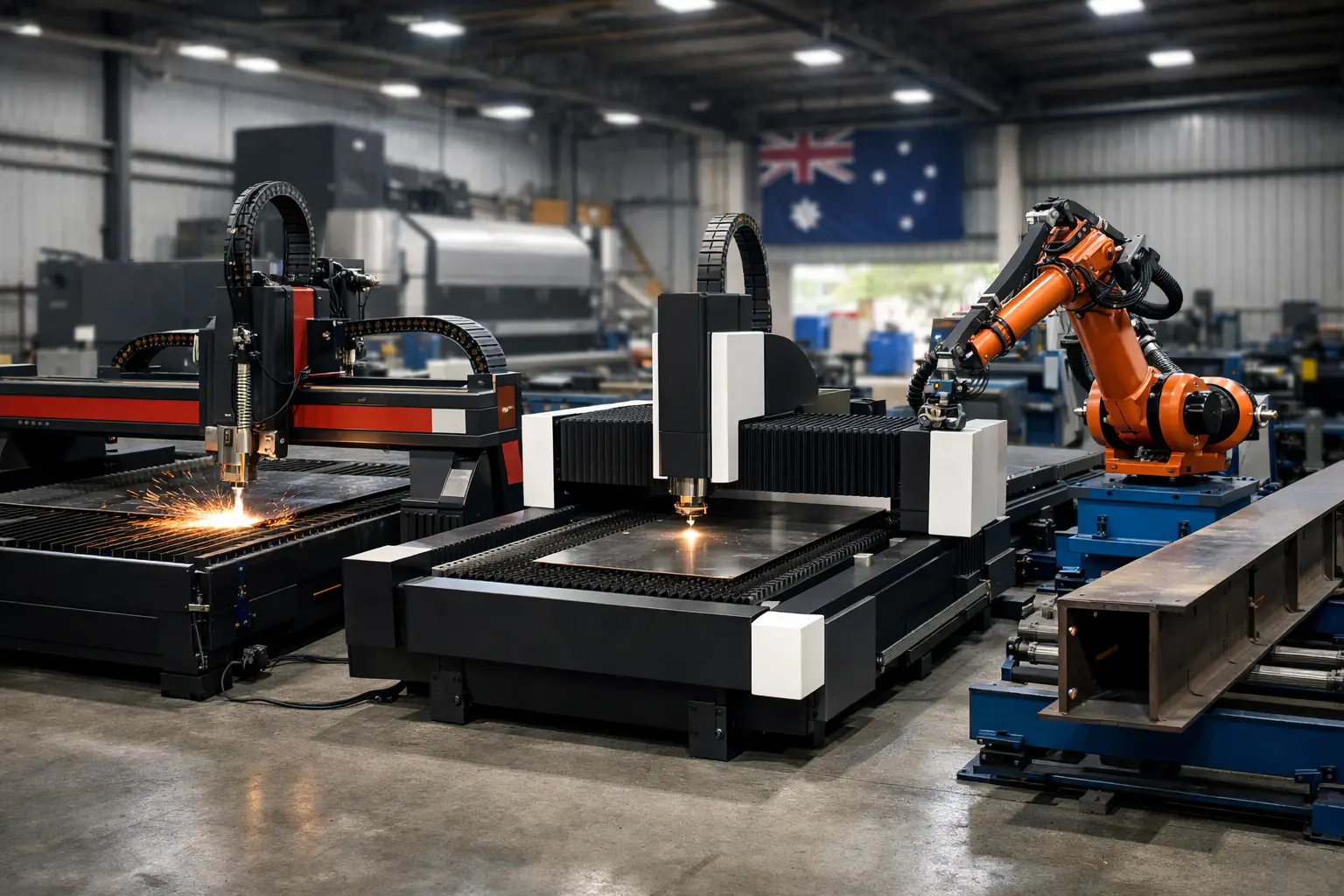
If you are comparing CNC machine manufacturers in Australia, the real question is not who has the biggest catalogue or the flashiest brochure. It is who can supply the right machine for your production, stand behind it when something goes wrong, and help you keep the workshop moving when downtime starts costing real money.
That matters because CNC buying decisions are rarely just about capital cost. A plasma cutter, router or fibre laser can improve throughput, reduce labour pressure and tighten quality control, but only if the machine suits your material, your workload and your operators. If it is overspecified, you pay for capability you will never use. If it is underspecified, you end up fighting bottlenecks, poor cut quality and service issues from day one.
What separates CNC machine manufacturers in Australia
Not every supplier in the market is actually a manufacturer. Some businesses design and build equipment locally. Some import complete systems. Others resell machines from overseas brands and add installation or limited support. None of those models is automatically wrong, but they are not equal when you need advice, parts or technical backup.
A genuine Australian manufacturer usually has a stronger handle on machine design, software integration and application fit. They are closer to the engineering decisions that affect performance. That tends to matter when your job is not standard, your material mix changes, or your production flow needs a tailored setup rather than an off-the-shelf package.
Local manufacturing also changes the support equation. When the team selling the machine is the same team involved in designing, building, programming or commissioning it, problems are usually diagnosed faster and resolved with fewer handballs. You are not stuck between a reseller, a freight delay and an overseas factory timetable.
For many Australian workshops, that is the real dividing line. It is not simply where the frame is welded or where the control system originated. It is whether the business you buy from can take responsibility for the full machine lifecycle.
The questions serious buyers should ask
Before comparing brands, be clear on your own process. A machine that suits a structural steel fabricator may be the wrong fit for a sign shop or cabinetmaker. Even within metal fabrication, plate thickness, duty cycle, nesting requirements and production targets can push you towards very different solutions.
Start with material type and volume. Mild steel, stainless, aluminium, composites, timber and plastics all place different demands on cutting technology. Then look at throughput. Are you cutting occasional one-offs, or are you running repeat jobs where speed, software automation and handling efficiency make a major difference to margin?
Support should be part of the buying criteria, not an afterthought. Ask who installs the machine, who trains the operators, who carries the parts, and who answers the phone when the machine stops on a Thursday afternoon. A sharp purchase price can lose its appeal quickly if every service issue turns into a wait.
It is also worth asking how honest the supplier is about process fit. A good manufacturer or technical partner should be prepared to tell you when plasma is more sensible than laser, when a router is the better option than forcing another process to do the job, or when a used machine may suit your business stage better than buying new.
Choosing the right process, not just the right brand
The market often treats CNC as one category, but the process matters just as much as the manufacturer. If you are cutting conductive metals at speed and want a practical balance between capability and investment, CNC plasma can be the right answer. If you need finer detail, cleaner edges and stronger performance on thin sheet, fibre laser may be a better fit. If you are working with timber, plastics, ACM or non-ferrous sheet in a cabinetmaking or signmaking environment, a CNC router makes far more sense.
That sounds straightforward, but many buying mistakes happen in the grey areas. Some businesses buy for the jobs they hope to win rather than the jobs they do every week. Others focus on cut quality without considering operating cost, consumables, extraction, software workflow or operator skill level.
A capable manufacturer should walk you through those trade-offs plainly. Faster is not always better if your bottleneck is loading and unloading. Higher precision is not always worth the extra capital if your downstream process does not require it. The right machine is the one that improves the full production chain, not just one metric on a spec sheet.
Why local support often outweighs sticker price
Australian workshops do not make money from machine ownership. They make money from output. That is why after-sales support deserves more weight than many buyers give it.
When a CNC system goes down, the cost is not limited to a repair invoice. It can mean missed delivery dates, idle staff, interrupted installation schedules and pressure on every other part of the workshop. If replacement parts are hard to source or technical support is filtered through multiple parties, downtime stretches out.
This is where local manufacturers and true technical suppliers usually stand apart. They can often provide quicker fault finding, better application support and more direct access to the people who understand the machine architecture. That can be the difference between a short interruption and a week of production headaches.
For that reason, ask practical questions. How quickly are service calls handled? Are spare parts stocked locally? Is training included? Can software support be provided remotely? Will the same business that sold the machine still be supporting it years later?
Customisation matters more than many buyers expect
A lot of workshops do not need a fully bespoke machine, but very few need a completely generic one either. Table size, bed configuration, power source, extraction setup, drilling or marking options, automation level and software workflow all affect how well the machine fits the job.
That is another reason to look closely at CNC machine manufacturers in Australia rather than only comparing imported stock models. A manufacturer with in-house engineering capability can usually adapt configuration more effectively to suit your floor space, production style and material profile. The result is often a machine that performs better in the real world, not just on paper.
Customisation does not have to mean complexity. Sometimes it is as simple as matching the right software package to your operator experience, integrating with existing workflow, or setting up the machine so loading and unloading is safer and faster. The point is that machine selection should reflect how your business actually works.
What a strong manufacturer relationship looks like
The best supplier relationships are practical and long term. They start with clear advice, realistic lead times and proper commissioning. They continue with operator training, software help, servicing, consumables access and technical support that does not disappear after handover.
That is the standard many buyers are now looking for. They do not just want a machine dropped on the floor and switched on. They want a supplier who understands that production environments change, staff change, job mix changes and machine support needs to keep up.
This is where a company such as ART CNC fits a different category from a basic reseller model. When the business designs, builds, programs, installs and supports the equipment it sells, the conversation stays grounded in production outcomes. That gives buyers a clearer path from initial enquiry to long-term operation.
How to compare suppliers without wasting time
A sensible shortlist is usually built on four things: process fit, support capability, machine quality and commercial reality. If one supplier cannot clearly explain why a machine suits your work, move on. If another has no local service structure, treat that as a serious risk. If the cheapest option comes with vague answers around parts, training or software, it may not be the cheapest for long.
It also helps to judge how the supplier communicates. Straight answers are a good sign. So is a willingness to discuss limitations, duty cycle, operating cost and maintenance honestly. Buyers in fabrication and manufacturing usually do not need a sales pitch. They need someone who understands production pressure and can recommend equipment accordingly.
There is no single best choice for every workshop. A smaller business may benefit from a simpler system with strong local backup. A high-volume operation may need a more advanced setup with automation and deeper software integration. The right manufacturer is the one that can match those needs properly and support the machine once it is earning its keep.
If you are weighing up CNC options, look past the headline price and ask who will still be useful to your business after installation day. That answer usually tells you more than the brochure ever will.
Why Australian Made CNC Machines Matter.
A machine looks good on the showroom floor when everything is clean, quiet and running to script. The real test starts when production is stacked up, a deadline is tight, and you need answers fast. That is where Australian-made CNC machines stand apart. For many Australian workshops, the value is not only in the machine itself – it is in the engineering behind it, the support after installation, and the speed of getting the right help when something needs attention.
For fabrication shops, cabinetmakers, sign businesses, metal processors and general manufacturers, buying CNC equipment is not a simple box-ticking exercise. The machine has to suit your material, your job mix, your operators and your production targets. It also needs to keep earning long after the invoice is paid. That is why the conversation around local manufacturing matters.
What Australian-made CNC machines really give you
The strongest argument for buying local is not patriotism. It is practicality. If a machine is designed and built here, there is usually a much better chance the people selling it understand local operating conditions, local compliance expectations and the day-to-day pressures Australian businesses are working under.
That changes the buying process in a meaningful way. Instead of being sold a standard machine that more or less fits, you are more likely to get a configuration built around your workload. That might mean the right table size, more suitable extraction, software that matches operator skill level, or a cutting process chosen for actual production efficiency rather than brochure claims.
It also changes what happens after installation. When support is local, downtime is easier to manage. Phone support is in your time zone. Spare parts are easier to source. Service technicians are not trying to troubleshoot from the other side of the world. For a workshop running to schedule, that is not a small detail. It can be the difference between a short delay and a week of lost output.
Support is part of the machine
A CNC system is never just steel, motors and software. It is a production asset that relies on setup, training, maintenance and sensible technical advice over time. This is where many buyers get caught. They compare machines on headline specs, then find out later that support is fragmented or slow.
If one business sells the machine, another installs it, a third handles software and someone else supplies parts, accountability gets murky very quickly. When something stops, every hour matters. You do not want a chain of emails explaining why the issue belongs to somebody else.
Australian-made CNC machines often appeal to serious buyers for this reason alone. When the same business designs, builds, programs and supports the equipment, there is a clear line of responsibility. Problems are easier to diagnose because the people helping you understand the machine at a deeper level. Advice tends to be more direct as well. You are more likely to hear what will actually work in your shop, not what helps move stock.
Local design usually means a better fit
Not every workshop needs the biggest machine or the highest advertised speed. In fact, chasing spec sheet numbers can be an expensive mistake. A machine that is oversized, overly complex or poorly matched to your material flow can slow production instead of improving it.
That is one reason local design matters. Australian manufacturers working directly with fabricators and production businesses tend to see the same operational issues again and again – labour constraints, inconsistent throughput, rework, bottlenecks at cutting, and uncertainty about which process suits the work. That feedback loop helps shape better machine design and better recommendations.
A metal fabricator cutting plate all day has different needs from a sign shop processing aluminium composite panel, and both are different again from a cabinetmaking business routing sheet materials. The right CNC solution depends on cut quality, edge finish, material thickness, nesting efficiency, operator capability and expected output. There is no honest one-size-fits-all answer.
The trade-off: local does not automatically mean perfect
It is worth being clear about this. Australian-made does not mean every local machine is better than every imported one. Build quality, engineering standards, control systems, software integration and support capability still vary from supplier to supplier.
Price can vary too. A locally built machine may have a higher upfront cost than a low-cost imported alternative. For some buyers, that will be the first thing they notice. The better question is what that price difference buys you over the life of the machine.
If it buys stronger uptime, faster service response, better training, easier access to parts and more suitable machine configuration, the numbers can shift quickly in your favour. If local support is weak or the machine is poorly matched to your workload, then the badge alone means very little. Buyers still need to assess the supplier, not just the country of manufacture.
How to assess Australian-made CNC machines properly
A sensible buying process starts with your production reality, not the machine catalogue. Look at the materials you cut most often, the thickness range, the volume you run, the level of automation you need and the skills available in your workshop. Be honest about where the bottleneck is. Sometimes the issue is speed. Sometimes it is accuracy. Sometimes it is setup time, software inefficiency or unreliable servicing on older equipment.
From there, ask direct questions. Who engineered the machine? Who installs it? Who provides training? Who handles software issues? Where do spare parts come from? How quickly can technical support respond? If a breakdown happens, what does that support process actually look like?
These are not side questions. They are central to whether the purchase works.
It also helps to ask what can be tailored. A good supplier should be comfortable talking through process selection, extraction, power requirements, software workflow, consumables, maintenance planning and future capacity. If the sales conversation is only about closing quickly, that is a warning sign.
Why downtime risk changes the buying decision
For most workshops, downtime is more expensive than they first estimate. It is not only lost machine hours. It is delayed jobs, idle labour, disrupted scheduling and customer frustration. If your CNC is a key part of production, support capability has a direct bearing on profit.
That is why many buyers now place after-sales support alongside machine performance when comparing options. A fast, accurate cutter is valuable. A fast, accurate cutter backed by direct local technical support is far more valuable.
This is especially true for businesses adopting a new process for the first time. If you are moving into CNC routing, upgrading to fibre laser, or replacing manual cutting with plasma automation, the learning curve matters. Training quality, software setup and operator confidence all affect how quickly the machine starts paying for itself.
Choosing a partner, not just a supplier
The best machine purchases usually come from straightforward technical conversations. What are you cutting? What finish do you need? What volume are you trying to reach? How much floor space is available? What is the realistic budget, and what level of automation will actually deliver a return?
That approach is not flashy, but it works. It gives you a machine that fits the business instead of forcing the business to fit the machine. It also builds a better support relationship over the long term.
That is where companies like ART CNC have a clear advantage when they stay true to that model – designing, building, programming and supporting the systems they sell, while giving practical advice about what will and will not suit the job. For Australian manufacturers, that level of direct accountability is often worth more than a lower sticker price.
Australian-made CNC machines make sense when they are backed by genuine engineering capability, honest process advice and support that shows up when it matters. If you are investing in equipment that your business will rely on every day, that is the standard to measure against.
Industrial CNC Router/Mill Types & Uses..
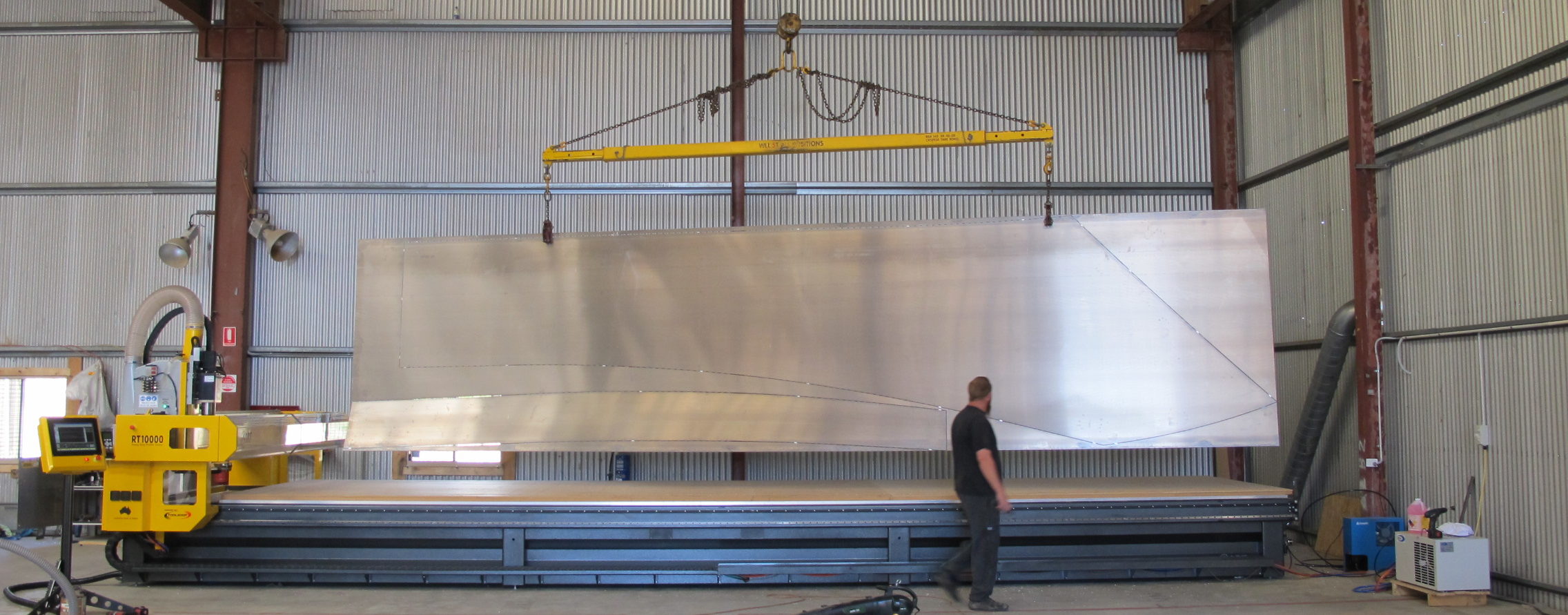
Industrial CNC routers are computer-controlled cutting machines used to cut, shape, and engrave a wide variety of materials. These machines are essential for many industries, including woodworking, plastics, and metal fabrication. They are known for their precision, speed, and versatility, making them valuable assets in any manufacturing facility.
CNC routers use a cutting tool, such as a router bit, to remove material from a workpiece. The tool is mounted on a spindle and is controlled by a computer, which sends instructions to the machine to move the tool in a specific pattern. This allows for highly precise cuts and engravings, as well as the ability to create complex shapes and designs.
Several different types of industrial CNC routers are available, each with unique features and capabilities. Some common types include:
- 3-axis routers: These machines have three axes of motion, allowing them to move in the x, y, and z directions. They are commonly used to cut flat materials like wood or plastic sheets.
- 4-axis routers: These machines have an additional axis of motion, allowing them to rotate the workpiece in addition to the x, y, and z axes. This is useful for cutting and engraving cylindrical objects like pipes or furniture legs.
- 5-axis routers: These machines have two additional axes of motion, allowing them to move in a full range of directions. They are commonly used for cutting and engraving complex shapes, such as aerospace parts or sculptures.
- Flatbed routers: These machines have a flatbed, typically made of aluminium, where the workpiece is secured. They are commonly used for cutting sheet materials.
- Gantry routers: These machines have a gantry structure that holds the cutting tool. They are commonly used for cutting large materials, such as plywood or MDF sheets.
Industrial CNC routers are typically more expensive than hobbyists or entry-level machines, but they offer many advantages for businesses. They are built to handle heavy use and can operate for long periods without needing maintenance. They also come with advanced CNC nesting software that allows for more precise cuts and engravings and the ability to create complex designs.
In conclusion, CNC routers are the backbone of many manufacturing facilities, providing precision and speed in cutting and engraving various materials. They are versatile, durable, and can be adapted to various applications. With the right machine and the right software, you can create anything from simple signs to complex aerospace parts, making CNC routers an essential tool in any industrial setting.
What is a cnc router.

A heavy-duty CNC router is a computer numerically controlled (CNC) machine designed to handle the high demands of cutting and shaping large, dense materials such as wood, non-ferrous metals, and plastic. These industrial-grade machines are commonly used in various manufacturing, construction, and fabrication industries to create architectural models, prototype, and produce custom parts and components.
One of the main benefits of a heavy-duty CNC router is its ability to handle large workpieces and materials efficiently. These machines typically have a large table size and a powerful spindle that can handle cutting and shaping dense materials. They also often have a heavy-duty frame and gantry to provide the necessary stability and support for these operations.
In addition to their strength and durability, heavy-duty CNC routers also offer high precision and accuracy. These machines can produce precise cuts and shapes within a few thousandths of an inch tolerance. This level of accuracy is crucial for many manufacturing and fabrication applications where even the slightest deviation from the desired dimensions can result in faulty products or wasted materials.
Another critical feature of heavy-duty CNC routers is their versatility. Many of these machines come with various tooling options, including different cutting bits, drills, and other specialized attachments. This allows them to tackle various tasks and materials, from cutting and shaping wood and plastic to drilling and milling metal.
Overall, a heavy-duty CNC router is a powerful and essential tool for any business that needs to cut and shape large, dense materials with precision and accuracy. Whether in the manufacturing, construction, or fabrication industry, these machines can help you produce high-quality products and components faster and more efficiently.
CNC Plasma Cutters.
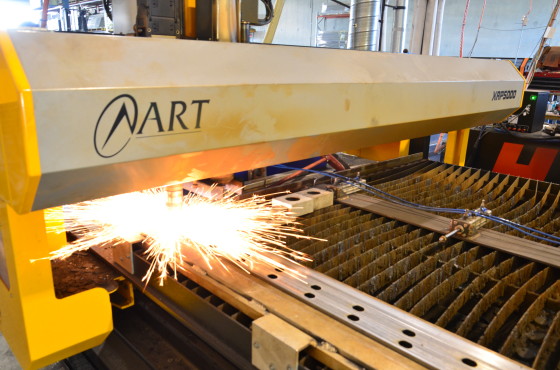
CNC plasma cutters are an essential tool for modern manufacturing and fabrication. Using a combination of high-pressure gas and an electric arc, these machines are able to cut through metal with precision and accuracy.
One of the biggest advantages of using a CNC plasma cutter is the speed and efficiency with which it can cut through metal. The use of computer numerical control (CNC) technology allows for the creation of detailed and complex designs with a high degree of precision. This makes CNC plasma cutters ideal for a wide range of applications, from cutting metal sheets for automotive parts to creating intricate designs for art and sculpture.
Another advantage of CNC plasma cutters is their versatility. Unlike traditional cutting methods, which are limited to cutting through certain types of metal, CNC plasma cutters can be used on a wide range of materials, including steel, aluminum, copper, and more. This makes them a valuable tool for any metalworking shop.
One of the key factors to consider when choosing a CNC plasma cutter is the size of the cutting area. Most CNC plasma cutters are available in a range of sizes, from small units that are ideal for hobbyists and small workshops, to larger units that can handle larger-scale projects.
In terms of power, CNC plasma cutters typically use a combination of compressed air and electricity to generate the plasma arc. The amount of power required will depend on the thickness of the material being cut, with more powerful units able to cut through thicker materials with ease.
Safety is another important factor to consider when using a CNC plasma cutter. These machines produce intense heat and powerful sparks, so it’s important to follow all safety guidelines and use proper protective equipment.
Overall, CNC plasma cutters are an essential tool for modern metalworking and fabrication. With their precision, versatility, and speed, these machines can help businesses and individuals alike to create high-quality, detailed designs with ease.
CNC Machinery.
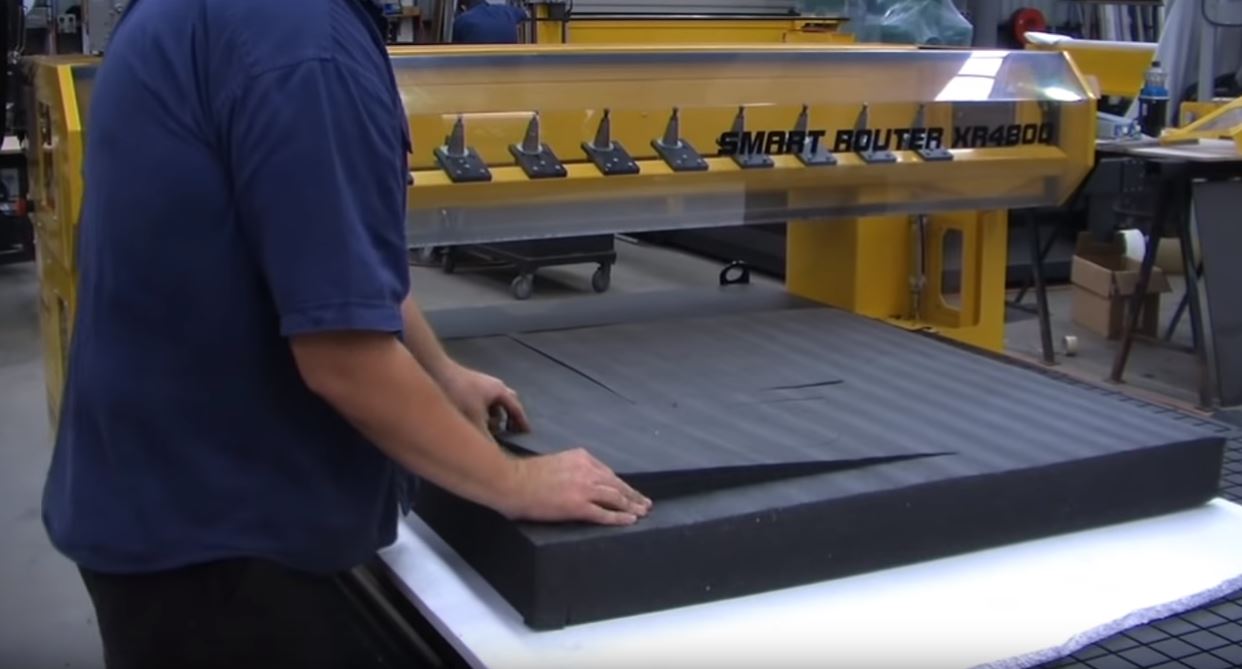
CNC machines, or Computer Numerical Control machines, are advanced tools that allow manufacturers to automate the production process and create high-precision parts and components. With CNC technology, manufacturers can create complex shapes, designs, and patterns with incredible accuracy and repeatability, making it the perfect solution for a wide range of industries, from automotive and aerospace to medical and consumer products.
CNC machines work by using computer-aided design (CAD) and computer-aided manufacturing (CAM) software to create virtual models of the parts and components to be produced. The CNC machine then uses this information to guide its cutting tools, drilling, and other operations to create the final product. This allows for precise control over the manufacturing process, ensuring that each part is made to the exact specifications required.
There are many different types of CNC machines, each designed for specific applications and materials. For example, CNC mills are used for cutting and shaping metal, while CNC lathes are used for creating precise rotational parts. CNC plasma cutters are another popular option, offering high-speed, high-precision cutting of metal and other materials.
CNC technology offers many benefits over traditional manufacturing methods. For one, it allows manufacturers to create parts and components with greater accuracy and repeatability, reducing waste and increasing efficiency. CNC machines can also be operated 24/7, allowing for faster production times and higher output. Additionally, CNC technology can be used to create complex designs and shapes that would be impossible or impractical to produce using manual methods.
Overall, CNC machines are an essential tool for any modern manufacturer, offering increased efficiency, accuracy, and flexibility in the production process. With CNC technology, manufacturers can produce high-quality parts and components at a faster rate, allowing them to stay competitive in an increasingly demanding market.
CNC machines are used in a wide range of industries, including automotive, aerospace, medical, and consumer products. In the automotive industry, for example, CNC machines are used to create precise, complex parts for vehicles, such as engine components, body panels, and suspension systems. In the aerospace industry, CNC machines are used to create high-precision parts for aircraft and spacecraft, such as fuselages, wings, and landing gear.
In the medical industry, CNC machines are used to create implantable devices, such as artificial joints and dental implants, as well as surgical instruments and other medical equipment. In the consumer products industry, CNC machines are used to create everything from smartphones and laptops to appliances and furniture.
CNC technology has also enabled the creation of new, innovative products that were not previously possible. For example, CNC machines are used to create customized, one-of-a-kind products, such as jewelry and other personal items. They are also used to create complex, organic shapes and designs, such as those found in modern architecture and art.
Overall, the applications of CNC technology are vast and constantly evolving. As the technology continues to advance, CNC machines will continue to play a vital role in the manufacturing industry, helping manufacturers create high-quality, precise products faster and more efficiently than ever before.